Industry
Diaphragm pumps are an essential tool for transferring a wide range of fluids, offering durability, flexibility, and self-priming capabilities. This blog compares AODD vs EODD pumps, helping you understand the differences and choose the right one for your application. We’ll take a closer look at how these pumps work, the key differences between air-operated (AODD) and electric-operated (EODD) diaphragm pumps, and help you decide which type might be best suited for your application.
Diaphragm pumps use a flexible diaphragm that moves back and forth to create a vacuum, drawing fluid in and then pushing it out through discharge valves. These pumps are designed to handle a wide range of fluid types and are commonly used in demanding industrial applications. They are incredibly versatile and used in a wide range of industries, including chemical processing, food and beverage, pharmaceuticals, mining, water treatment, and general manufacturing.

An Air-Operated Double Diaphragm (AODD) pump is powered by compressed air. The air alternates between two diaphragm chambers, pushing fluid through check valves in a pulsing motion.
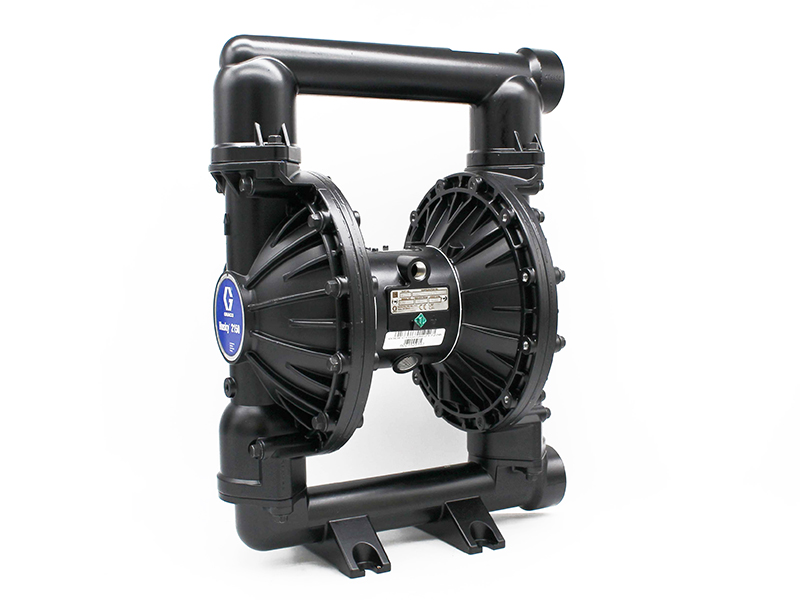
Key Benefits:
An Electric-Operated Double Diaphragm (EODD) pump functions similarly to an AODD pump in terms of fluid movement but is powered by an electric motor instead of compressed air. The motor drives the diaphragms using mechanical linkages or geared actuators.

Key Benefits:
⚠️ Dry Running Disclaimer: Diaphragm pumps can safely run dry without damaging internal components, making them ideal for intermittent or stop-start applications. However, prolonged dry operation may increase wear on diaphragms and valve seats over time, so it’s best used as a short-term feature rather than a continuous one.
| Aspect | AODD Pumps | EODD Pumps |
|---|---|---|
| Power Source | Compressed air | Electric motor |
| Energy Efficiency | Less efficient (continuous air use) | Highly efficient (low energy use) |
| Flow Control | Pulsing, less precise | Smooth and adjustable |
| Setup Cost | Lower initial cost | Higher upfront cost |
| Operating Cost | High (compressed air is expensive) | Low (efficient electric use) |
| Suction Lift | Strong self-priming capability | Generally strong, depends on motor |
| Noise Level | Higher noise levels due to air exhaust | Quieter operation, suitable for noise-sensitive environments |
Choose AODD pumps when your system already uses compressed air or when simplicity and lower setup costs are important. Choose EODD pumps if you’re looking to reduce long-term energy costs or need smoother, more controllable flow.
Both AODD and EODD diaphragm pumps are excellent tools — the best choice depends on your application. Air operated diaphragm pumps are rugged, reliable, and ideal for challenging fluids and environments. Electric operated diaphragm pumps shine when efficiency and flow precision matter most.
Recommended Reads, Products & Resources
Need help choosing the right diaphragm pump for your system? Get in touch with TF Pumps — our technical team can guide you through the best solution for your application.
Fill in the form below and one of our friendly advisors will contact you.