Industry
Piston pumps are one of the oldest and most reliable pump designs in industry, trusted wherever fluids need to be moved at high pressure or recovered from drums and containers with minimal waste. Whether you’re transferring lubricants in a workshop, feeding a spray finishing line, or evacuating food product from a bin, understanding how a piston pump works will help you specify the right unit for the job. This guide explains the working principle, the main design variations, and where piston pumps perform best. For further information or specific questions, please contact us on +44 1332 913500.
A piston pump is a positive displacement pump. Rather than spinning an impeller to throw fluid outward like a centrifugal pump, it moves a fixed volume of fluid with every stroke of a reciprocating piston. Because the displaced volume stays the same regardless of discharge pressure, piston pumps deliver predictable, repeatable flow that is directly proportional to pump speed. This makes them well suited to transfer, dosing, dispensing and metering duties where consistency matters.
Most industrial piston pumps are air operated. A compressed air motor at the top of the pump drives the piston, and the ratio between the area of the air motor and the area of the fluid piston determines the pressure multiplication. A 5:1 ratio pump, for example, turns 7 bar of air supply into roughly 35 bar of fluid pressure. Higher ratios deliver higher fluid pressures, which is how air-operated piston pumps reach outputs far beyond what the air line alone could provide.
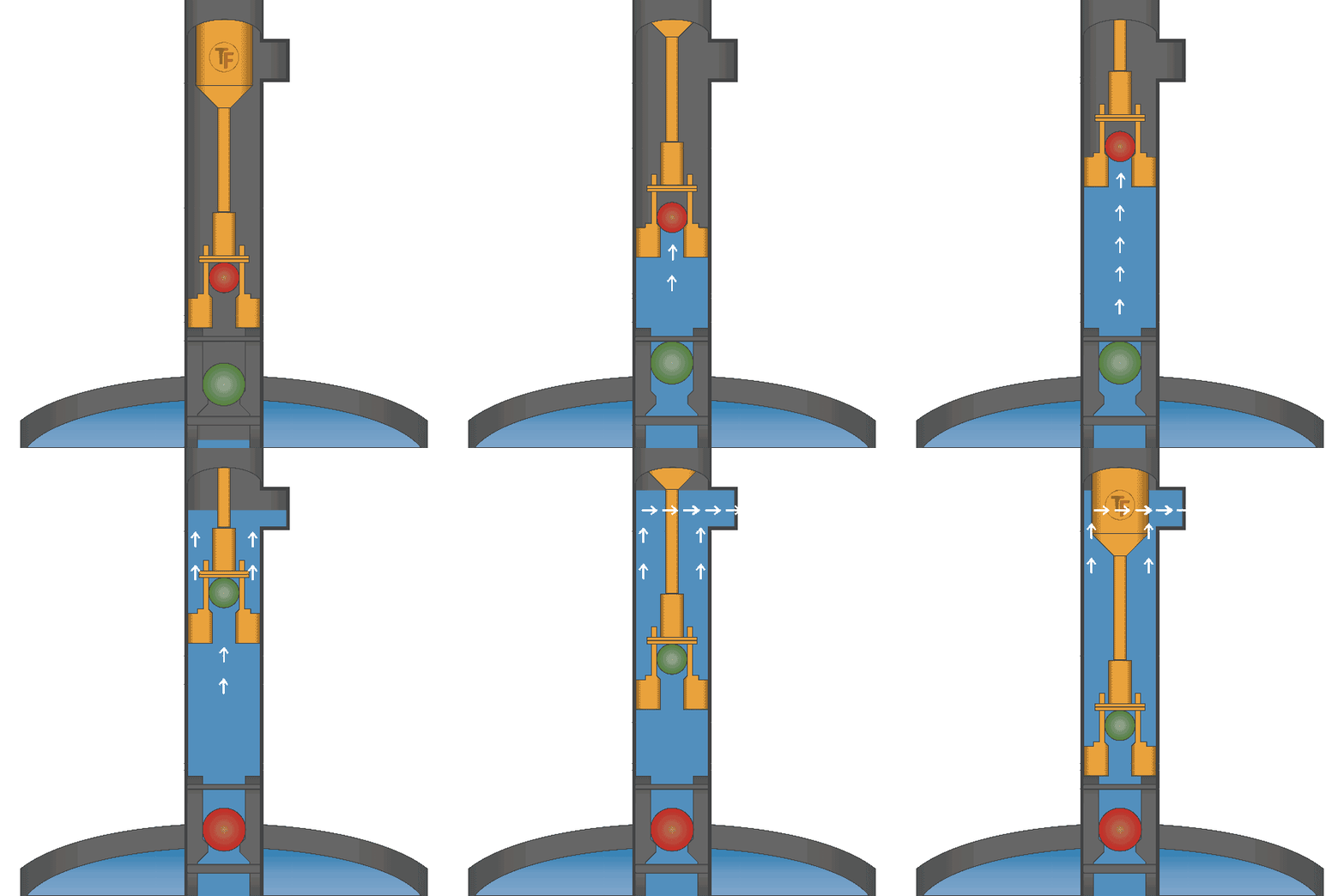
The animation above shows the cycle in action. The pump relies on two one-way check valves working in opposition: an intake valve at the base of the fluid section (the lower ball in the animation) and a piston check valve that travels with the piston itself (the upper ball).
As the air motor pulls the piston rod upward, the piston check valve closes. Fluid sitting above the piston is lifted towards the outlet, while the rising piston creates a vacuum in the chamber below it. That vacuum pulls the intake valve open and draws fresh fluid up from the drum, tank or container into the lower chamber.
When the piston changes direction, the pressure below it forces the intake valve shut. The trapped fluid has nowhere to go except through the now-open piston check valve, transferring it from the lower chamber to the space above the piston, ready to be lifted on the next upstroke.
This cycle repeats with every stroke. In double-acting designs, fluid is delivered on both the upstroke and the downstroke, which smooths output and increases flow. Because each cycle displaces a fixed volume, output can be controlled simply by regulating the air supply: more air pressure means faster strokes and more flow, with no gearbox or variable speed drive required.
The terms are often used interchangeably, but there is a genuine design difference. In a piston pump, the high-pressure seal is fitted to the piston and reciprocates with it inside the cylinder. In a plunger pump, the seal is stationary within the pump body and a smooth plunger slides back and forth through it.
Because the seal in a plunger pump doesn’t move, it can withstand far higher pressures. Piston designs typically deliver outputs in the region of 7 to 80 bar, while plunger designs can reach 700 bar and beyond, which is why plunger pumps dominate applications like high-pressure jetting, hydrostatic testing and reverse osmosis. Plunger pumps generally need a flooded suction or a booster pump on the inlet, whereas piston pumps tolerate lower inlet pressures and are better suited to drawing product directly from drums and containers.
Piston pumps generate pressures that few other pump designs can match. Air-operated units with high ratio motors comfortably handle thick greases, sealants, adhesives and heavy coatings that would stall other pump types.
As positive displacement pumps, flow is proportional to speed. This makes piston pumps predictable for batching, dosing and metering, where a known volume must be delivered every time.
Piston pumps are among the most efficient pump designs available, typically achieving 85 to 90% efficiency. In container evacuation duties, piston-based unloading systems can recover up to 99% of the product from a drum or bin, dramatically reducing material waste.
From thin solvents and inks through to peanut butter, tomato paste and heavy epoxies, piston pumps handle low, medium and high viscosity fluids. Chop-check and priming piston variants are designed specifically for materials too thick to flow into a standard pump inlet.
The slow, steady displacement action moves product without the heat, agitation or shear that can damage sensitive materials, which is one reason sanitary piston pumps are widely used for food, beverage and cosmetic transfer.
Air-operated piston pumps contain no electric motor at the wet end, so ATEX-rated versions are available for environments with flammable solvents, fuels and coatings.
No pump design suits every duty, and piston pumps have a few characteristics worth planning around. The reciprocating action produces a pulsating flow, which can usually be smoothed with a pulsation dampener where a steady delivery is needed. High-pressure piston and plunger designs are best suited to clean liquids, as abrasive particles accelerate seal and valve wear. And while the upfront cost is higher than a simple centrifugal or diaphragm pump, the efficiency, accuracy and product recovery of a piston pump frequently deliver a lower total cost of ownership over its working life, which with proper maintenance can easily exceed five to ten years.
Piston pumps appear across a remarkably broad range of industries. Common applications include:
We supply the full Graco and Aro piston pump ranges, covering everything from simple drum transfer through to sanitary evacuation, heavy sealant extrusion and automatic lubrication. These are the ranges we most frequently specify:
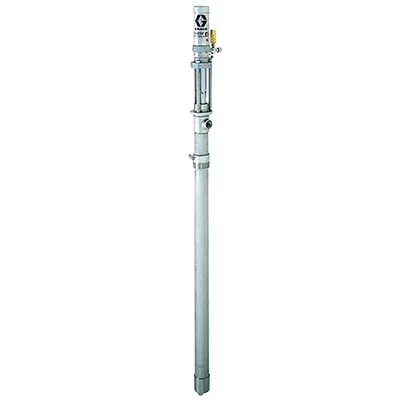 |
Graco Fast-Flo A dependable entry point for low viscosity fluid transfer, moving oils, inks, thinners and antifreeze between drums and dispensing stations. |
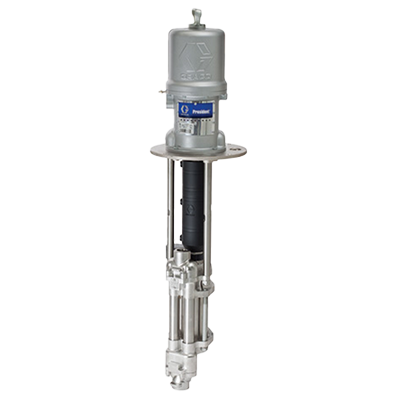 |
Graco President A medium pressure workhorse for industrial coating supply, paint circulation and general fluid transfer, including tough or catalysed materials. |
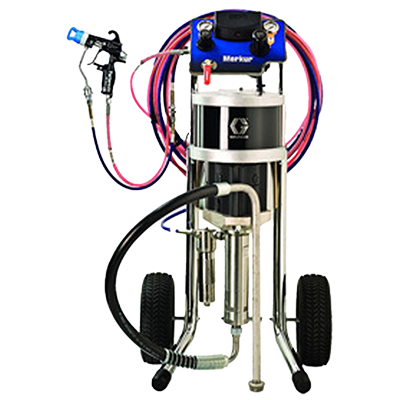 |
Graco Merkur Built for precision spray finishing across air spray, air-assisted and airless systems, with an easy-flush design for fast colour changes. |
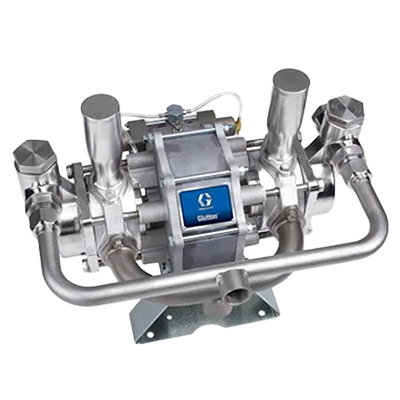 |
Graco Glutton High pressure transfer and spraying of paints, primers and high-solids coatings, with the muscle for abrasive and moisture-sensitive materials. |
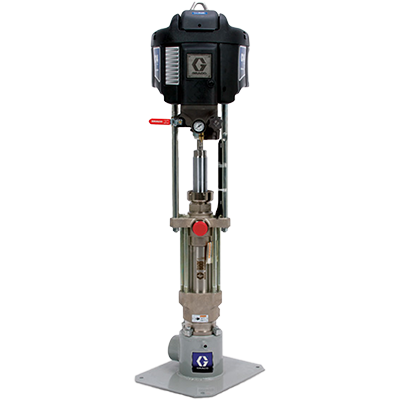 |
Graco Checkmate Designed for medium to high viscosity materials like sealants, adhesives and grease, feeding applicators, meters and packaging lines straight from pails and drums. |
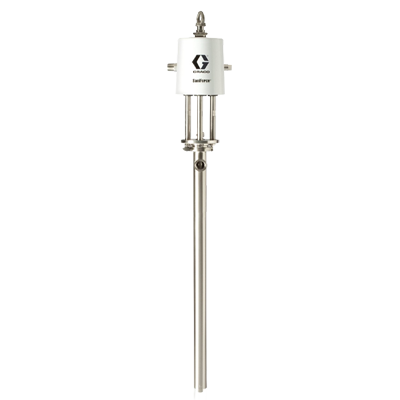 |
Graco SaniForce Sanitary piston pumps for food, beverage and personal care, gently transferring everything from juices to peanut butter with evacuation rates up to 99%. |
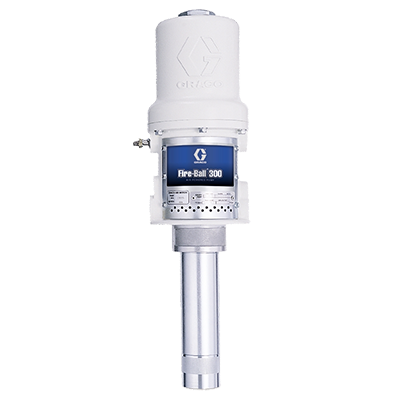 |
Graco Fireball, LD, G1 & G3 Series Lubrication specialists, covering manual oil and grease dispensing in workshops through to fully automatic lubrication systems for industrial machinery and fleet vehicles. |
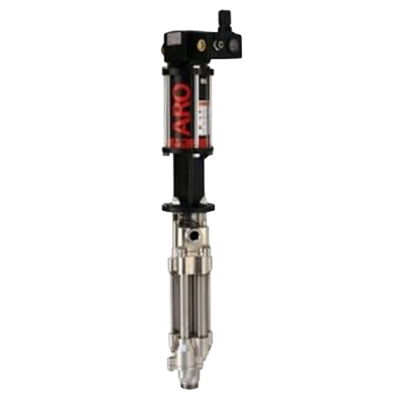 |
Aro 2-Ball & 4-Ball Piston Pumps Air-operated pumps built on N-Series, Thunder Series and AFX motors, with 2-ball designs for uniform delivery of paints, coatings and sealants, and 4-ball designs for high-volume recirculation up to 124 LPM. |
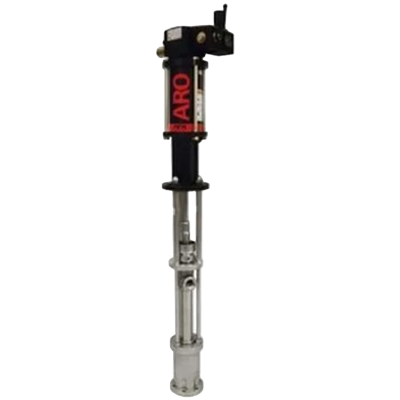 |
Aro Chop-Check & Lubrication Pumps Chop-Check pumps tackle the heaviest materials, handling viscosities up to 1,000,000 centipoise, while dedicated oil and grease configurations with ratios up to 100:1 cover workshop and industrial lubrication. |
Key benefits: High pressure capability • Accurate, repeatable flow • Up to 99% container evacuation • Handles thin fluids through to heavy pastes • Long service life with simple maintenance
Beyond pump selection, several additional components ensure safe, efficient piston pump operation:
We’re here to answer your questions and help you find the perfect piston pump for your application.
Fill in the form below and one of our friendly advisors will contact you.