Industry
Positive displacement pumps are one of the two fundamental pump families (the other being centrifugal), and they’re frequently misunderstood, misapplied, or passed over in favour of a centrifugal simply because centrifugals are more familiar. That tends to show up as cavitation damage, inconsistent dosing, or a pump that falls apart in performance the moment the fluid thickens. This guide covers how positive displacement pumps work, the types available, and where they genuinely outperform the alternatives. If you’re sizing a pump for a viscous, abrasive, shear-sensitive, or metered application, it’s worth reading before you specify. For guidance on a specific application, call our team on +44 1332 913500.
A positive displacement pump traps a fixed volume of fluid in a cavity, seals it off from the inlet, and forces it through the discharge. That cycle repeats mechanically, continuously. The volume moved per cycle is determined by the pump’s geometry; speed affects how many cycles occur per minute, but not the volume per cycle.
That one mechanical principle produces a set of characteristics that behave quite differently from centrifugal pumps:
One hard constraint: a positive displacement pump must never run against a closed discharge valve. A centrifugal in that situation simply recirculates fluid. A PD pump keeps displacing regardless, and pressure will build until something fails: the pipework, a seal, or the casing. A pressure relief valve on the discharge side is not a precaution; it’s a fundamental part of the installation.
Most pump decisions start here. Rather than hedging, here is how the two families divide up in practice:
Choose a positive displacement pump when:
Choose a centrifugal pump when:
Broadly: centrifugal pumps move large volumes of thin fluids efficiently; positive displacement pumps handle demanding fluids precisely.
PD pumps split into two groups: reciprocating and rotary. Reciprocating pumps use a back-and-forth motion to draw fluid in and push it out through check valves. Rotary pumps use one or more rotating elements to carry fluid continuously from inlet to outlet. Rotary designs generally produce smoother flow; reciprocating designs tend to handle higher pressures and are often a better fit for precise metering.
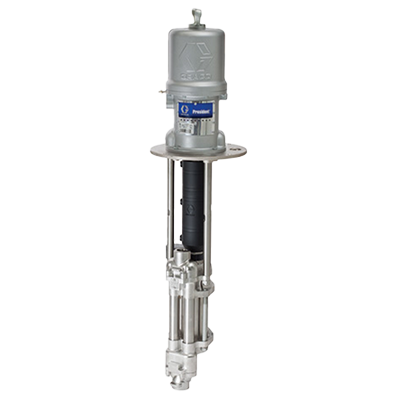 |
Piston & Plunger Pumps Piston and plunger pumps cover the highest pressure range of any PD type, with plunger pumps reaching several hundred bar in water jetting and hydraulic applications. The key mechanical difference: in a piston pump the seals travel with the piston; in a plunger pump the seal is fixed and the plunger passes through it, making plunger designs more reliable at extreme pressures. Both produce pulsating flow, so a multi-cylinder configuration or discharge accumulator is usually needed where smooth delivery matters. |
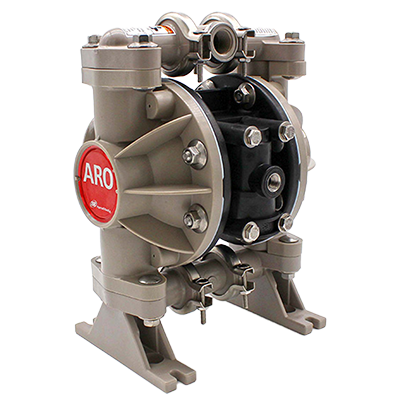 |
Diaphragm Pumps A flexible membrane creates a fully sealed pumping chamber where fluid never contacts any mechanical components, making diaphragm pumps the standard choice for corrosive chemicals, abrasive slurries, and applications where leakage is not acceptable. Air-operated double-diaphragm (AODD) variants are widely used in hazardous environments, but it is important to note that AODD pumps can generate a static spark if not properly earthed and bonded, so ATEX-rated models are required in classified zones. They can also tolerate dry running without damage, unlike most other pump types. Flow is pulsating, as with all reciprocating designs. |
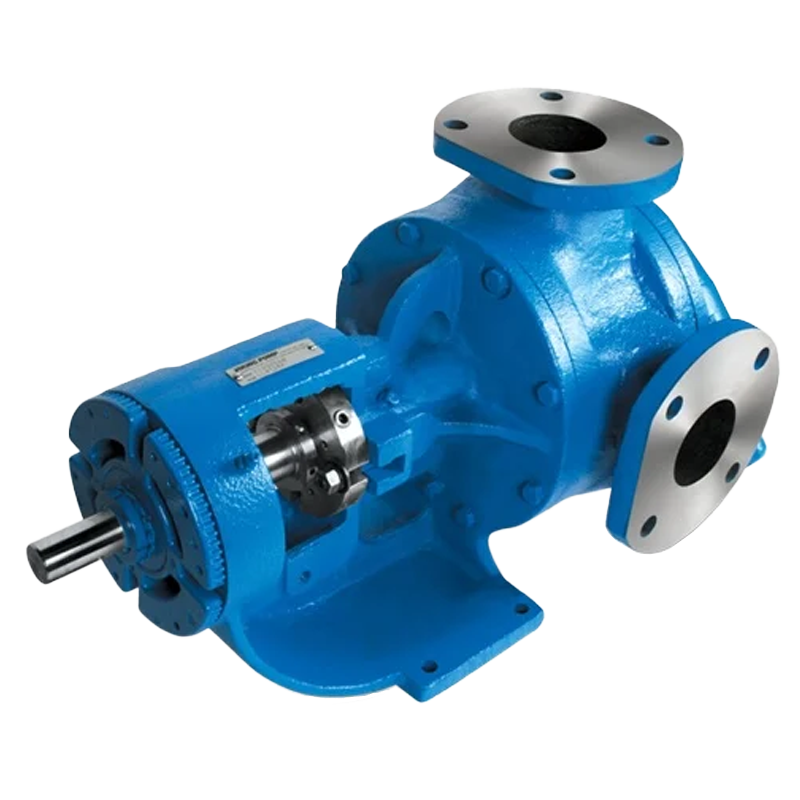 |
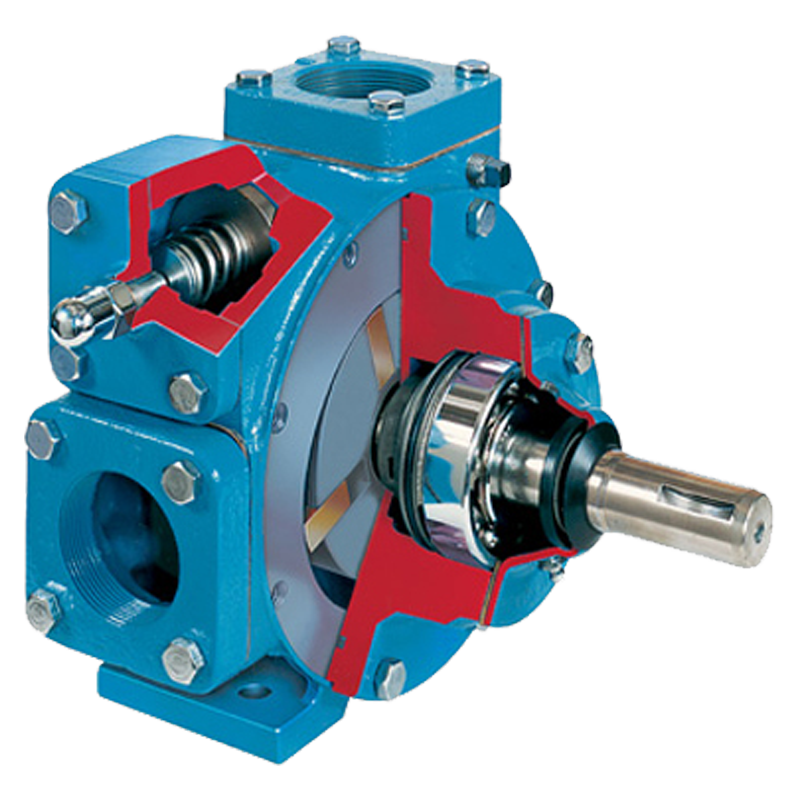
Gear Pumps Two meshing gears rotate inside a close-tolerance housing. Fluid is carried in the spaces between gear teeth from inlet to outlet; as the teeth mesh at the centre, fluid is positively expelled. External gear pumps (two separate gears on parallel shafts) handle higher pressures; internal gear pumps (a smaller gear rotating inside a larger one) are gentler on the fluid and better suited to viscous or shear-sensitive materials. An important distinction: gear pumps perform better as viscosity rises because thicker fluid reduces internal slip, improving volumetric efficiency, though very high viscosities can increase mechanical friction losses, so there is a practical upper limit depending on the design. They are the natural choice for oils, fuels, resins, and lubricants. We supply gear pumps to order. Call us to discuss your requirements. |
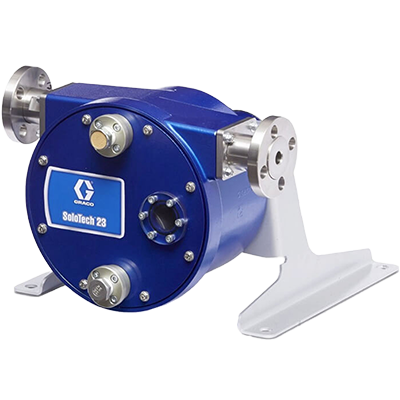 |
Peristaltic Pumps A roller compresses a flexible tube to push fluid forward; when the compression passes, the tube springs back and draws in the next slug. Fluid only ever contacts the tube, never any mechanical parts, which makes peristaltic pumps the go-to for sterile processes, aggressive chemicals, and abrasive slurries. The tube is the main consumable, and replacement frequency depends on the fluid, operating pressure, and duty cycle. |
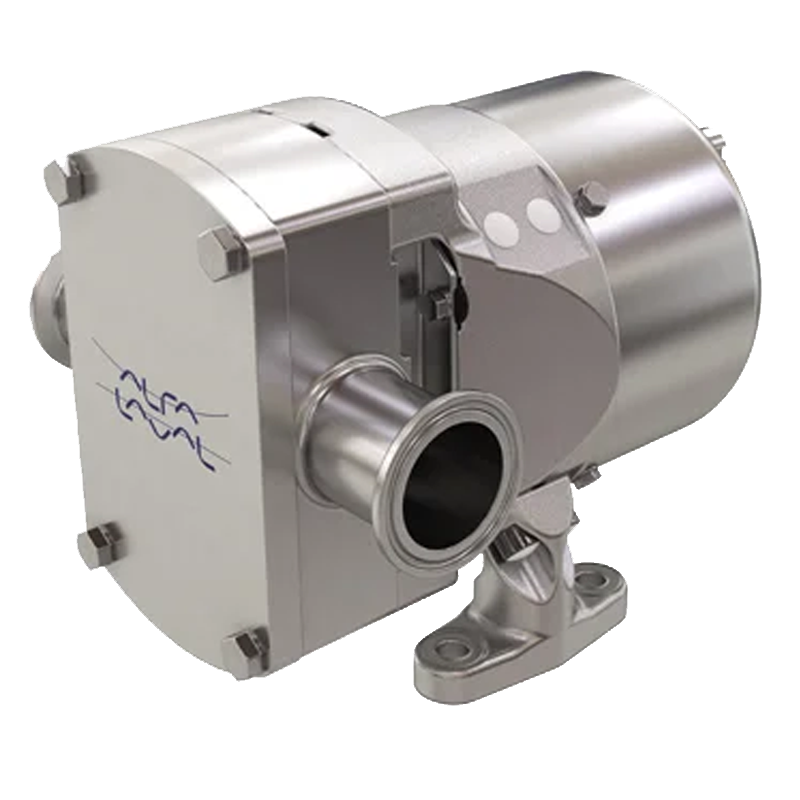 |
Lobe Pumps Lobe pumps work on the same principle as gear pumps but with smooth lobes that never contact each other, eliminating wear particles in the product and keeping shear forces very low. That makes them the dominant choice in food and beverage, pharmaceutical, and cosmetics manufacturing, where product integrity and hygiene standards are non-negotiable. They are designed for clean-in-place (CIP) and sterilisation-in-place (SIP) procedures. We supply lobe pumps to order. Call us to discuss your requirements. |
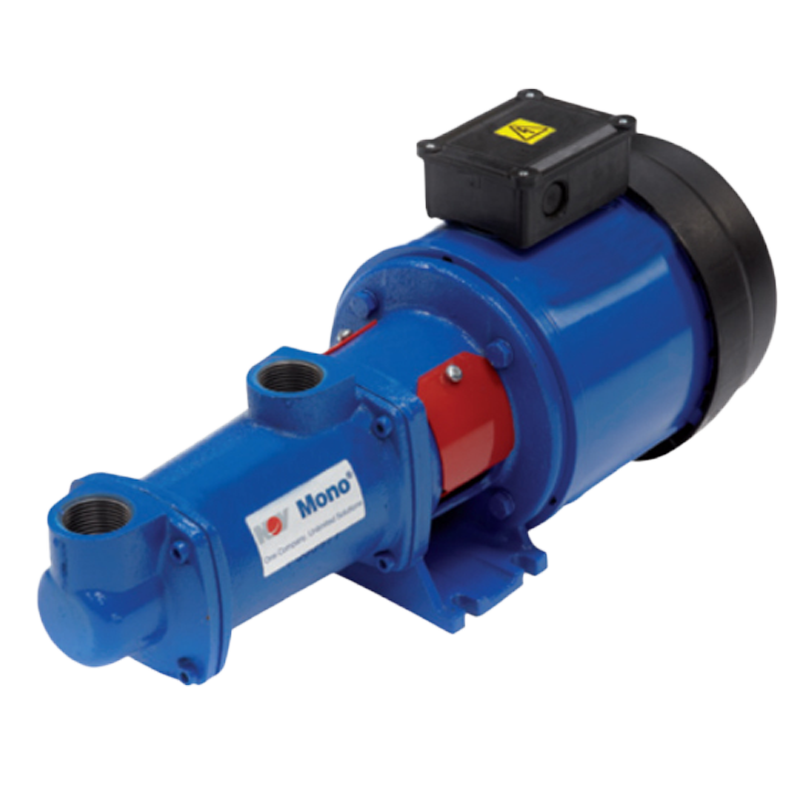 |
Screw Pumps Helical screws push fluid along their length through a close-fitting housing, producing a continuous, low-turbulence flow that makes screw pumps among the smoothest-running PD types. Single-screw (progressive cavity) designs handle viscous fluids and those carrying soft or hard solids well; twin and triple-screw pumps are widely used in marine fuel transfer and hydraulic systems where clean, high-pressure delivery is needed. Capital cost is higher than simpler rotary designs, reflecting the precision manufacturing the close-fitting geometry requires. |
 |
Vane Pumps Spring-loaded vanes slide in and out of a rotor, maintaining contact with the pump housing to create expanding and contracting cavities that move fluid from inlet to outlet. As the vanes wear down they extend further, providing a degree of self-compensation that helps maintain performance over time. Compact and quiet, vane pumps suit fuel transfer and LPG dispensing well, but should be kept away from abrasive fluids, which accelerate vane wear significantly. We supply vane pumps to order. Call us to discuss your requirements. |
Viscosity is usually the most important variable. For low-viscosity fluids (under around 50 cP), gear and screw pumps can suffer significant internal slip past clearances, which reduces flow accuracy. At very high viscosities (above 10,000 cP), filling the pump cavities fast enough becomes the limiting factor, and a flooded suction or a slower operating speed may be needed to prevent cavitation at the inlet. Always specify viscosity at operating temperature, not at ambient; many oils thin out considerably when hot, which changes both pump selection and performance calculations.
Rotary pumps with tight internal clearances (gear pumps in particular) do not cope well with solids or abrasive materials. Even fine grit wears close-tolerance surfaces quickly, reducing volumetric efficiency and shortening pump life. For fluids carrying hard or soft solids, diaphragm, peristaltic, or progressive cavity designs are a better fit. When specifying, state the maximum expected solids size and concentration.
Not all PD pump types reach the same pressure range. Piston and plunger pumps cover the highest pressures. Gear and multi-screw pumps handle mid-range industrial pressures well. Diaphragm and peristaltic pumps are generally lower-pressure options.
Fluids that can be physically degraded by mechanical shear, including emulsions, polymer solutions, biological samples, creams, and certain food products, need a pump that moves fluid gently. Lobe and peristaltic pumps are the usual answers. Gear pumps and high-speed vane pumps generate more shear and should be avoided where product quality could be affected.
In food, beverage, pharmaceutical, and cosmetics applications, the pump must be cleanable to the required standard. Lobe pumps are purpose-designed for CIP and SIP procedures. Peristaltic pumps are cleaned by tube replacement. Gear pumps have internal clearances that are difficult to clean thoroughly, which rules them out of most hygienic processes.
Reciprocating PD pumps produce pulsating flow by nature. Many applications tolerate this without issue, but some processes do not: certain filtration membranes, flow meters, and precision spray systems among them. Rotary PD pumps produce much smoother flow. Where a reciprocating pump is the right choice on other grounds but pulsation is a concern, a pulsation dampener on the discharge side or a multi-head pump configuration will reduce it to an acceptable level.
These two items account for a significant share of early PD pump failures in the field:
First, fit a pressure relief valve on the discharge side. It should be set to open below the pressure rating of the weakest component in the system, whether that is a hose, fitting, seal, or piece of pipework. Without one, a closed valve or blocked line will build pressure until something gives, and it is rarely the cheapest component that fails first.
Second, calculate the Net Positive Suction Head (NPSH) available at the pump inlet and compare it against the pump’s NPSH requirement. PD pumps handle poor suction conditions better than centrifugals, but they are not immune. Long suction lines, elevated fluid temperature, or significant lift can still cause incomplete cavity filling or cavitation, which reduces accuracy and causes internal damage over time.
If you’re unsure which type of positive displacement pump suits your application, our team is happy to work through the specification with you. Call us on +44 1332 913500 or browse our full pump range online.
Fill in the form below and one of our friendly advisors will contact you.