
What Is Viscosity Correction?
Viscosity correction refers to adjusting a pump’s expected performance, primarily flow rate, to account for the viscosity of the fluid being pumped. As fluid viscosity increases, resistance to flow also increases, meaning the pump delivers less flow than its nominal rating.
In practical terms, viscosity correction applies a correction factor or derating percentage to manufacturer flow data so engineers can better predict actual operating performance. This concept is often discussed alongside pump viscosity derating, as higher viscosities effectively reduce pump capacity.
If you’re new to the topic, this explanation answers a common question: what is viscosity correction and why does it matter in real pumping applications?
Why Do Pumps Lose Flow with Thicker Fluids?
All pump types experience performance degradation with increased fluid viscosity. This includes positive displacement pumps (such as AODD pumps, gear pumps, and piston pumps), centrifugal pumps, and peristaltic pumps. While some pump technologies handle viscous fluids better than others, all are affected by viscosity.
The reasons vary slightly by pump type but follow consistent patterns:
- Internal friction rises, making it harder for fluid to fill and evacuate pump chambers or pass through impeller passages
- Internal check valves (in positive displacement pumps) respond more slowly, especially with heavy or sticky fluids
- Cycle speed decreases (in positive displacement pumps) or impeller efficiency drops (in centrifugal pumps)
- Power or air consumption increases, further limiting efficiency
These effects combine to reduce the achievable flow rate. This is why viscosity adjustment is necessary when dealing with thicker liquids such as oils, resins, adhesives, slurries, or food products.
How Viscosity Influences Flow Rate
Viscosity is essentially a fluid’s resistance to flow. The higher the viscosity, the more energy is required to move it through a pump and piping system.
General performance trends across pump types include:
- Low-viscosity fluids (water, solvents) flow close to published curves
- Medium-viscosity fluids (hundreds to thousands of cP) show moderate flow reduction
- High-viscosity fluids (tens of thousands of cP and above) require significant derating
Note: cP (centipoise) is a common unit of dynamic viscosity, where water at room temperature has a viscosity of approximately 1 cP.
The viscosity impact on pump performance is typically not linear. In many cases, the relationship follows a power-law decline, meaning the rate of flow reduction accelerates as viscosity increases. This non-linear behaviour is particularly pronounced in smaller pumps and varies significantly across pump technologies.
As a general guide, expect 10 to 30 percent flow reduction when moving from water to fluids around 1,000 cP, though this varies significantly by pump size, type, and design. For AODD pumps specifically, flow reduction can reach 50 to 60 percent at 5,000 cP or higher.
How Pump Size and Type Affect Viscosity Response
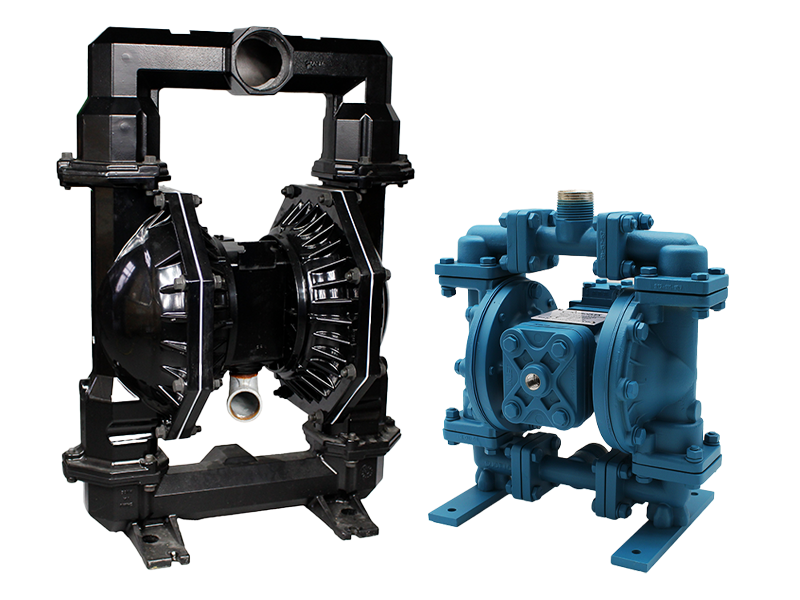
Pump size plays a critical role in how viscosity affects performance. In positive displacement pumps like AODD pumps and gear pumps:
- Smaller pumps tend to lose flow more rapidly as viscosity increases. Narrower internal passages and smaller check valves amplify viscous resistance.
- Larger pumps typically handle viscous fluids more effectively, maintaining a higher percentage of their rated flow due to larger chambers and valve areas.
Centrifugal pumps show different behaviour: they suffer more significant performance losses at high viscosity than positive displacement pumps, as impeller blade efficiency drops considerably. Viscosity correction becomes critical when using centrifugal pumps for fluids above 5,000 cP.
This means viscosity correction factors are especially important when sizing any pump for thick fluids. Oversizing is often a deliberate strategy to offset expected derating.
Understanding the Concept of Derating
Derating is the process of intentionally reducing a pump’s rated performance figures to reflect real operating conditions. In the context of viscosity correction, derating adjusts flow expectations based on fluid thickness.
For example, an AODD pump rated at 1,000 L/min with water may only deliver:
- 700 to 750 L/min at moderate viscosity (approximately 1,000 cP)
- 500 to 600 L/min at high viscosity (approximately 5,000 to 10,000 cP)
This is why understanding viscosity correction factors is critical when evaluating pump suitability. Without applying derating, systems may suffer from underperformance, excessive energy consumption, or process inefficiencies.
When Is Viscosity Correction Necessary?
Viscosity correction should be considered in the following situations:
- Pumping fluids above water-like viscosity (above 10 cP)
- Accurate flow rates are critical to the process
- Comparing pump sizes or technologies for the same application
- Designing systems for continuous or high-duty operation
It is particularly important when engineers are trying to calculate viscosity correction during the selection stage rather than troubleshooting later.
Important note: Temperature affects fluid viscosity, which in turn affects correction factors. Many fluids become significantly less viscous when heated, so operating temperature should always be considered when applying viscosity corrections.
Viscosity correction is also closely linked to other fluid properties. Understanding the difference between viscosity and density can prevent common specification errors, especially when handling heavy but free-flowing liquids.
How Are Viscosity Correction Factors Applied?
Manufacturers typically provide viscosity correction data in the form of charts or tables. These allow engineers to apply a multiplier or percentage reduction based on fluid viscosity and pump size.
To estimate real-world flow performance, viscosity correction tables are the most reliable starting point. For AODD pumps specifically, refer to the AODD Pump Viscosity Correction Tables, which provide guidance across different viscosities and pump sizes. You can also use the Kew Pump Viscosity Calculator as a quick tool for estimating viscosity-corrected flow rates.

Important Disclaimer: Viscosity correction tables are provided for guidance and comparative sizing only. For specific pump models and critical applications, always consult the pump manufacturer’s data and viscosity correction curves. Different manufacturers and pump technologies have different viscosity response characteristics.
For example, manufacturers like Aro, Wilden, and Yamada publish specific viscosity derating curves for their AODD pump ranges. Many pump manufacturers also provide online tools or calculators for viscosity-corrected flow estimates. Contact your supplier for pump-specific correction data.
For clarity, ensure viscosity values are expressed in the correct units.
Final Thoughts
Viscosity correction is not an optional consideration in pump selection and system design. It is fundamental to accurate sizing and expected performance. By understanding how viscosity affects flow, recognising the need for derating, and applying appropriate correction factors from reliable manufacturer data, engineers can avoid costly oversizing or underperformance.
Whether you’re selecting an AODD pump, centrifugal pump, gear pump, or other technology, using reliable correction tables and a clear understanding of fluid behaviour ensures consistent, efficient results, even in the most demanding viscous applications.