Industry
Application Guides
With the increase of wild weather conditions, higher water levels and budget reductions on flood defences, pumping flood water is becoming a more regular occurrence. Owning a flood water pump can prove extremely useful for the above emergencies in the home, along with for gardening, pumping water from a borehole, a well or filling a swimming pool.
If flooding is severe it is recommended to turn off your electricity as soon as possible, but only if you can do so without stepping in water. If you cannot reach your fuse box safely, call an electrician.
Some water pumps for flooding can be powered using a ‘non-interruptible supply’; this means they are powered by external batteries or a generator. If the mains supply is cut due to flooding, the flood water pump will still function to keep pumping water out efficiently.
The flow rate of a flood water pump is the amount of water it can expel, typically measured in Litres Per Minute (LPM), Gallons Per Minute (GPM), or Cubic Metres Per Hour (m³/hr). This helps you gauge how quickly a water pump will drain your flooded area.
The maximum head lift indicates how far the pump can move water from its position. For any water drainage pump, knowing the distance to your discharge point ensures effective removal of water.
Consider whether the water is fresh, salt water, or contains debris. Flood water is usually dirty, often referred to as “black water”. Choosing a dirty water pump designed for such conditions will prevent clogging and damage.
Different types of flood and water pumps are suited for different situations. The ideal pumps for flood water removal include:
Submersible water pumps are particularly effective for quickly removing large volumes of water from flooded areas.
Flood water pumps can be electrically operated (single or three-phase) for plug-and-play solutions. If flooding affects your electricity supply, consider engine-operated pumps or using a generator. Selecting the right power source ensures your pump for water continues to operate when needed most.
Taking the points above into consideration, it’s now time to browse for suitable flood water pumps. Keep in mind flow rate, maximum head, type, and power options when selecting the best pump for your flood water management needs.
A submersible pump for flooding, also referred to as sump pumps, are encased in a tight waterproof shell and comes with a sealed electrical cord for safety, allowing them to be completely submerged in water. Their outlet, typically located at the top of the pump, is usually British Standard Porting (BSP), allowing you to easily attach a hose barb and hose. The larger the outlet is, the faster it will pump out water. These pumps are available in 110v, 230v and 400v.
They are ideal for draining flooded basements, cellars & gardens and an easy plug in and play option when your electrics haven’t been affected.
The downside of submersible pumps is that they only drain to a certain level, leaving you with surface water. To combat this, some pump models offer a shallow suction device add on which can be mounted on the pumps, ensuring complete drainage of flooded floors (down to 3mm).
We recommend the following Submersible Pumps –
Electrically Driven Submersible Flood Water Pumps
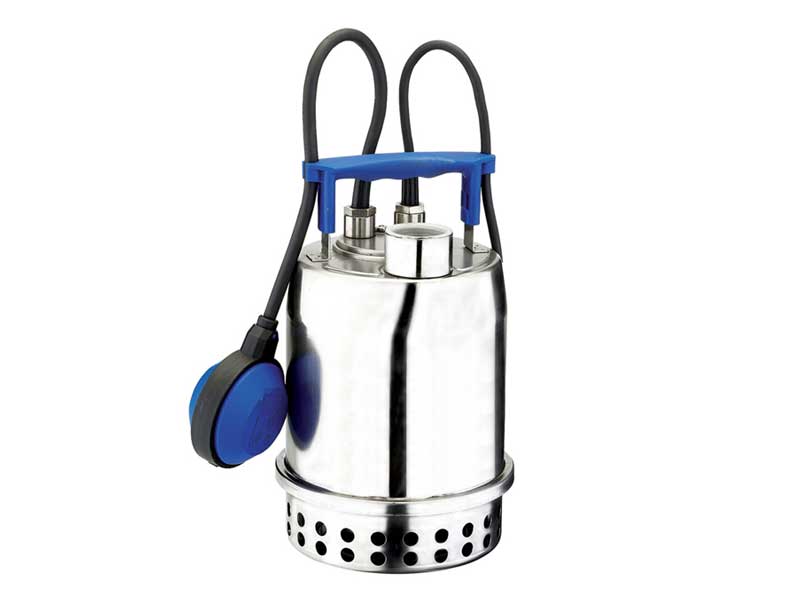
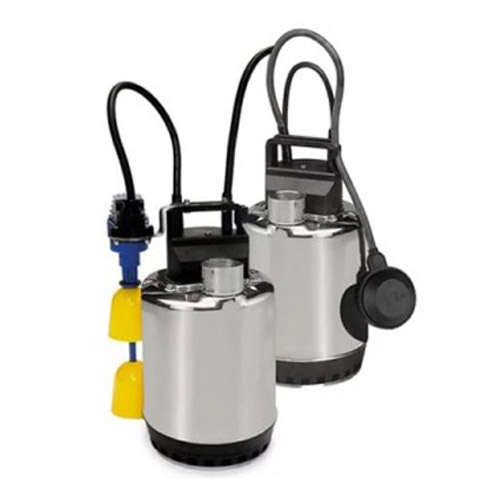
Puddle Sucker Pumps are compact submersible pumps that alleviate the need for any additional suction devices. Puddle suckers can drain water down to 1mm and allows for the remaining residue to be swept into the pump for removal.
The pumps we have on offer are available in 110v or 230v and have a hose barb included, ready for you to attach your hose. They are generally smaller than your average submersible pump, meaning they remove the water slower.
They are simple plug in and pump solutions for removing flood water from cellars, garages and basements.
We recommend the following Puddle Sucker Pumps –
Koshin – PXL Range
If you are stuck without power, and do not have access to a generator, then an engine driven pump would be the most suitable. Engine pumps will require oil for the engine and petrol before they are used, and they cannot be submerged in water. They do however have a considerably bigger suction lift than submersible pumps, so are still ideal for emptying flooded cellars & basements.
The engine pumps on offer are small and compact, making them portable and ideal for flooding situations.
We recommend the following Engine Powered Pumps –
Koshin – SEH-25L
Click Here To Browse SEH-25L Flood Water Pumps

Choosing the right pump for your application is important, but after you’ve selected your pump, it’s crucial to think about your other requirements for the job. Below you’ll find some items that may be considered essential, depending on your situation. If you’re ever unsure on your requirements, our team is available to help you.
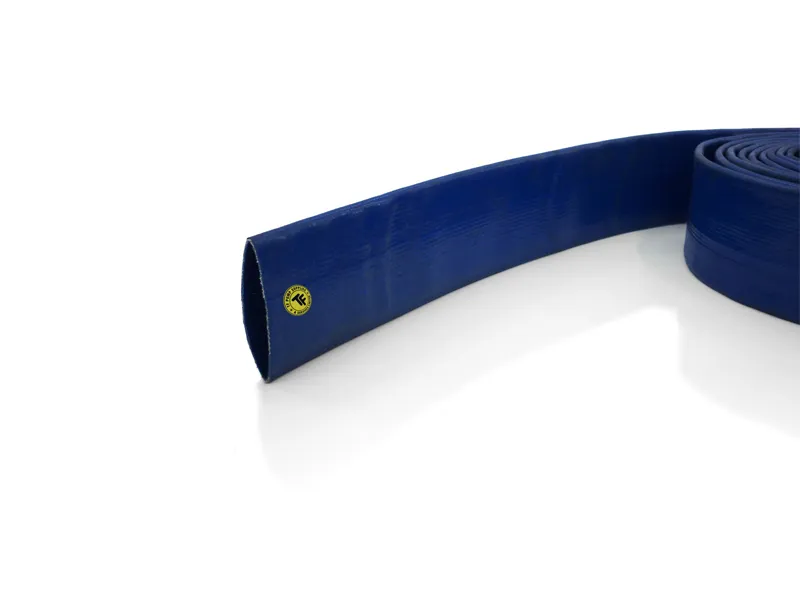
Blue Lay Flat hose is a lightweight hose that will coil back up once used, allowing for easy storage. However, this style of hose can be damaged easily and is known to kink.
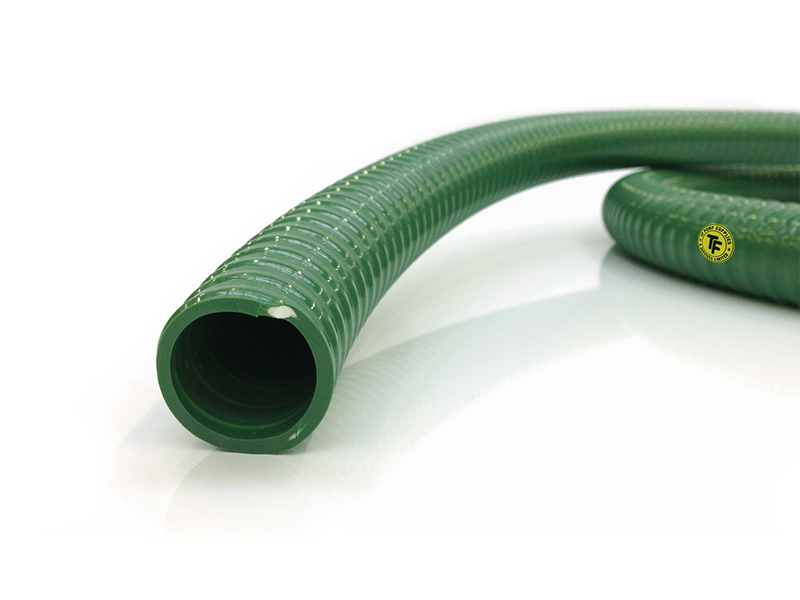
Our green suction hose is a heavier duty, making it very unlikely to split or kink. However, it is a lot more rigid, making it harder to store after use.
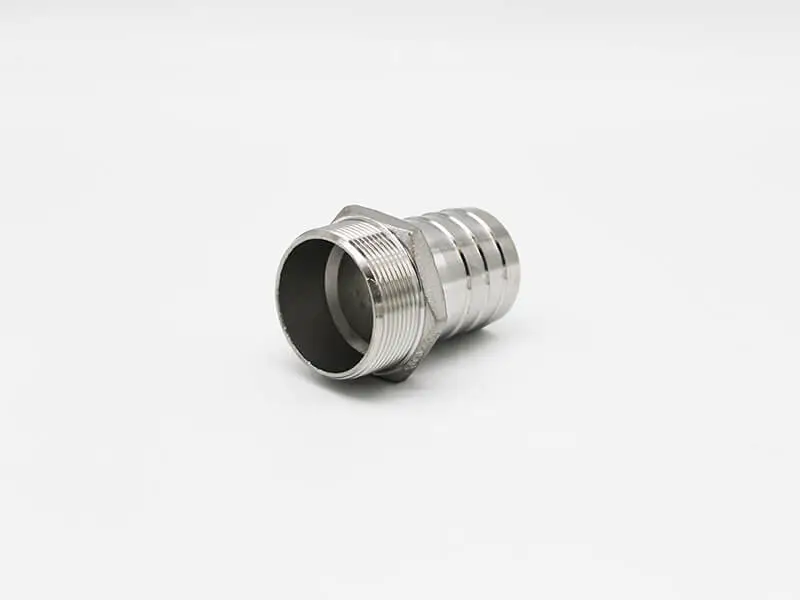
Some pumps will come with hose barbs, however many won’t. You will need to match your hose barb size to your pump’s ports. They will simply screw in, allowing you to attach a hose to the pumps.
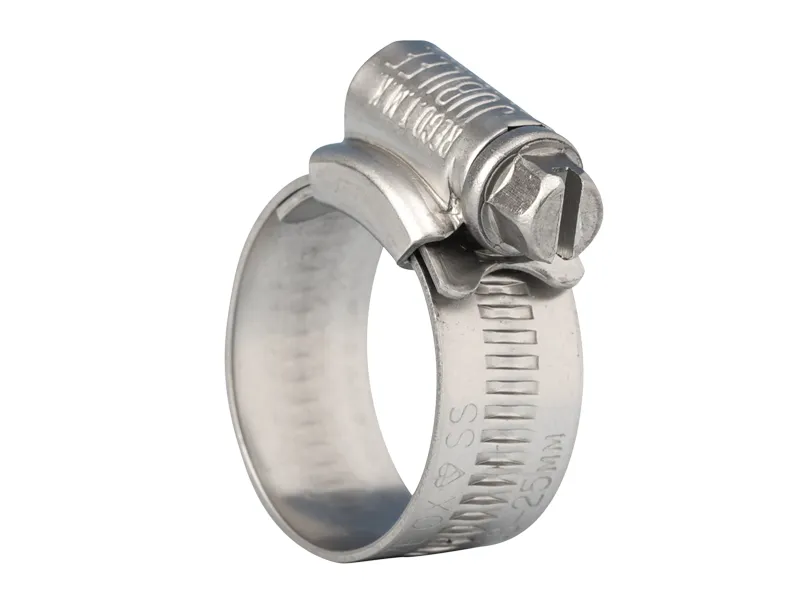
Jubilee Clips are used to keep hoses in place on the inlets and outlets of the pumps.
Fill in the form below and one of our friendly advisors will contact you.