How Do Multistage Pumps Work?
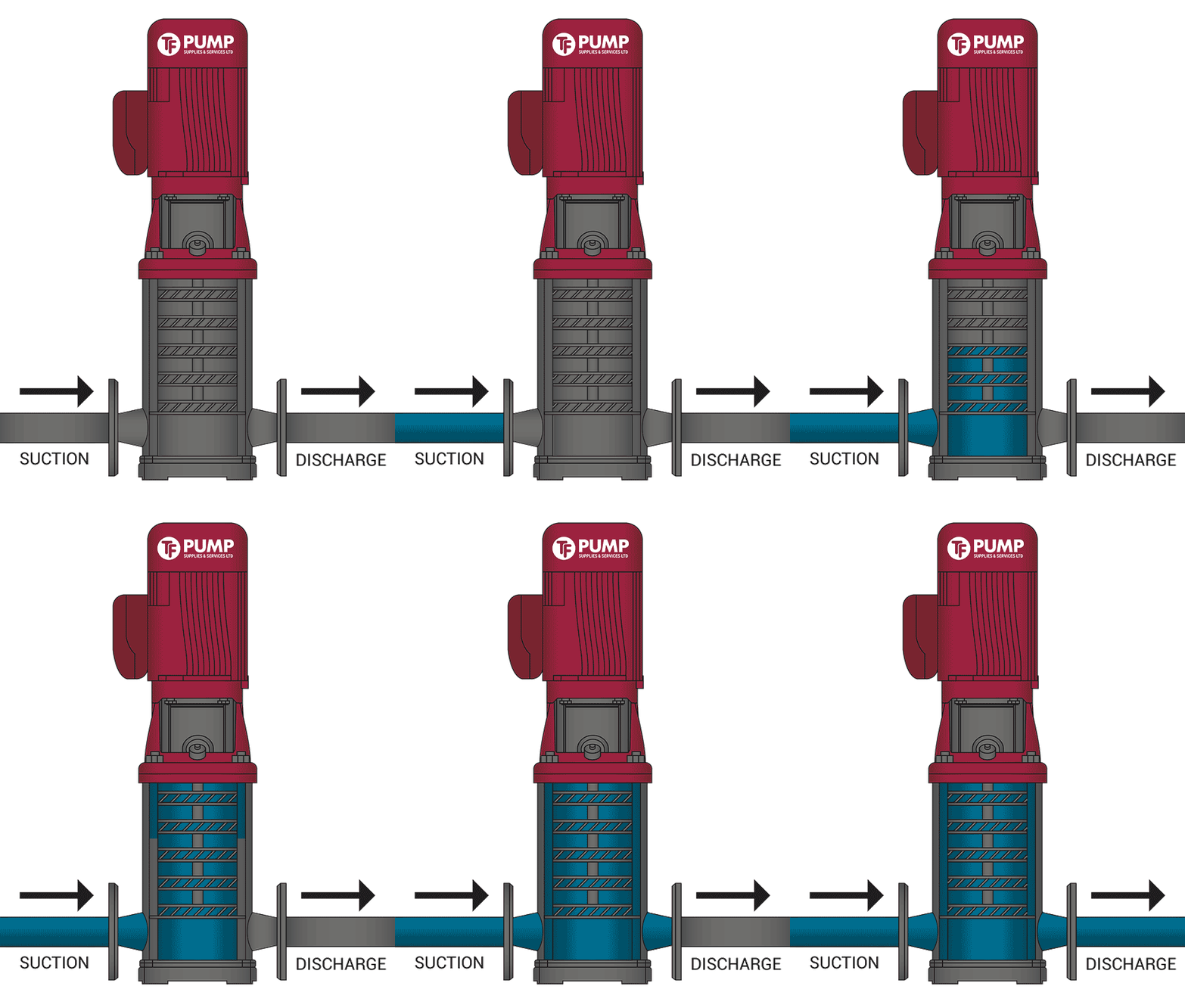
Multistage pumps are centrifugal pumps that use two or more impellers, called stages, mounted on a single shaft. Each stage progressively increases the fluid pressure, allowing the pump to achieve high pressures for a wide range of applications. Here’s a step-by-step overview of how multistage pumps operate:
- Fluid Entry (Suction Stage): Fluid enters the pump through the suction inlet. It may pass through a strainer or filter to remove debris that could damage the impellers.
- First Impeller Stage: The fluid is drawn into the first impeller, which imparts kinetic energy, increasing the fluid’s velocity and pressure. A diffuser or volute converts some of the velocity into additional pressure.
- Intermediate Stages: The partially pressurised fluid is directed to the next impeller stage. Each subsequent impeller adds more energy, gradually raising the fluid pressure. The number of stages depends on the system’s pressure requirements.
- Flow Path Between Stages: Fluid passes through inter-stage casings or channels that guide it smoothly to the next impeller, often with guide vanes to reduce turbulence and improve efficiency.
- Final Stage and Discharge: After the final impeller, the fluid reaches its maximum design pressure and exits through the pump discharge, ready for the piping system at the required flow and pressure.
Optional Components: Some multistage pumps include balance drums or wear rings to reduce axial thrust, along with bearings and seals to support the shaft and prevent leakage.
What Are the Different Types of Multistage Pumps?
Multistage pumps come in several designs depending on their application and installation:
- Horizontal Multistage Centrifugal Pump (above ground): Common in industrial and water supply applications.
- Vertical Multistage Centrifugal Pump (above ground): Ideal for high-rise water supply and boiler feed systems.
- Submersible / Sump Pump Types: Used to pump liquids from pits, sumps, or wells.
- Side Channel Pump: Suitable for low flow, high pressure, and self-priming applications.
- Combination Pumps: Example: centrifugal low NPSH first stage with side channel additional stage.
- Horizontal Split Case Pump: Typically used for large water distribution and high-flow applications.
- Vertical Turbine Pump: Suitable for deep well or reservoir pumping.
- Sanitary Multistage Pump: Designed for food, beverage, and pharmaceutical applications.
Applications of Multistage Pumps
- Boiler Feed Systems: Delivering water into boilers at high pressure.
- Water Supply in High-Rise Buildings: Maintaining consistent pressure throughout tall buildings.
- Reverse Osmosis Systems: Providing the high pressures needed for desalination.
- Agricultural Irrigation: Efficiently pumping water over long distances.
- Fire Fighting Systems: Delivering water at the high pressures required for firefighting.
Pros and Cons of Multistage Pumps
| Pros |
Cons |
| Achieves higher pressures than single-stage pumps |
More complex design, which can increase maintenance requirements |
| Efficient operation, reducing energy consumption |
Initial cost can be higher compared to single-stage pumps |
| Vertical configurations save floor space |
May require skilled personnel for installation and servicing |
| Durable and able to handle demanding industrial applications |
Performance can be affected if not properly sized for the system |
| Versatile for a wide range of industrial and commercial applications |
Multiple stages can increase the footprint in horizontal designs |
Final Thoughts
Multistage pumps are essential for any process requiring high-pressure fluid transfer. Understanding their types, applications, and the pros and cons helps in selecting the right pump for your specific needs. Explore our full range of multistage pumps here. For advice or assistance with multistage pumps, contact our team.
Additional Reading