Industry
Flow rate is the first number you need before choosing an irrigation pump. Get it wrong in either direction and you pay for it: undersize the pump and coverage suffers at the far end of the system; oversize it and you waste energy, risk waterlogging and runoff, and put unnecessary wear on pipework and fittings. This guide walks through two practical methods for calculating the flow your system actually needs, with worked examples in metric units. If you would rather talk it through with an engineer, call us on +44 1332 913500.
Irrigation flow is usually quoted in litres per minute (l/min) or cubic metres per hour (m³/hr). Pump datasheets tend to use m³/hr, while sprinkler and dripper specifications are often given in l/min or litres per hour (l/hr), so you will need to convert between them:
One more conversion does most of the heavy lifting in irrigation calculations: 1 mm of water applied over 1 m² equals 1 litre. Keep that in mind and the area-based method below becomes straightforward arithmetic.

This method suits agricultural fields, sports pitches, large lawns and any system where you are irrigating a defined area to meet a daily water requirement. It works in three steps.
The water requirement is the depth of water your crop or turf needs per day, expressed in millimetres. It varies with the plant, the soil, the season and the weather, so this figure must come from your agronomist, seed supplier or turf consultant for your specific crop and site. Whatever figure you are given, design the system around the peak requirement for the season, not the average: a system sized on the average will fall behind exactly when demand is highest.
Multiply the requirement by the irrigated area. Because 1 mm over 1 m² is 1 litre:
Daily volume (litres) = area (m²) × requirement (mm/day)
Decide how many hours per day the system will actually run. Shorter windows demand higher flow; longer windows let a smaller pump do the same work. Night watering windows are common because evaporation losses are lower and water pressure from shared supplies is often better.
Required flow (l/hr) = daily volume (litres) ÷ operating hours
Worked example: 200 m² garden lawn
Using an illustrative requirement of 4 mm/day, a 200 m² lawn watered in a single 1 hour session:
If the system is already designed, or you are designing around specific sprinklers or drippers, the flow requirement is simply the sum of every emitter that runs at the same time. Manufacturers publish the flow of each sprinkler or dripper at a given operating pressure, so the calculation is:
Required flow = number of emitters running simultaneously × flow per emitter
Worked example: sprinkler zone
A zone of 12 impact sprinklers, each rated at 15 l/min at its operating pressure:
Worked example: drip line
A drip system with 400 drippers, each rated at 4 l/hr:
Note how different the two answers are. Drip systems apply water slowly and directly to the root zone, so they need far less flow than sprinklers covering the same area. That difference feeds straight into pump selection.
Most irrigation systems are split into zones that run one after another rather than all at once. This is the single biggest opportunity to reduce the pump size you need. The pump must supply the largest simultaneous demand, not the sum of every zone in the system.
For example, a system with four zones of 180, 150, 120 and 100 l/min run in sequence needs a pump sized for 180 l/min, not 550 l/min. If two zones ever run together, size for that combined pair. Decide your zone schedule before you size the pump, and check the operating window still works: four zones at 2 hours each is an 8 hour cycle.
Design for the peak week of the season, not the seasonal average. A system sized for average demand will fall behind exactly when the crop or turf is under the most stress. It is normal to allow a small margin on top of the calculated flow to cover emitter wear, minor leaks and pressure variation, but the right allowance depends on the system, so agree it as part of pump selection rather than adding an arbitrary percentage. Avoid significant oversizing: an oversized pump running against a small system wastes energy, can exceed the soil’s infiltration rate, and causes runoff rather than better coverage.
On infiltration: soil can only absorb water so fast. If your sprinklers apply water faster than the soil takes it in, the excess runs off no matter how well the flow calculation was done. Heavier clay soils absorb more slowly than sandy soils, so on clay it is often better to extend the operating window at lower application rates.
Once you have the flow figure, the second number a pump must be matched to is total head: the vertical lift from the water source, plus friction losses through pipework and fittings, plus the operating pressure your sprinklers or drippers need at the emitter. A pump that delivers the right flow at the wrong pressure will not run the system properly. Our guide to choosing your irrigation pump covers head and pressure alongside the other selection factors.
It is also worth checking that your water source can sustain the calculated flow. A borehole has a recovery rate, a rainwater tank has a finite volume, and abstraction from rivers or watercourses may need a licence. If the source cannot keep up with the pump, the calculation needs to start from what the source can supply.
With flow and head established, these ranges cover the common irrigation duties we specify. For how each pump fits the wider selection factors, see our guide to choosing your irrigation pump.
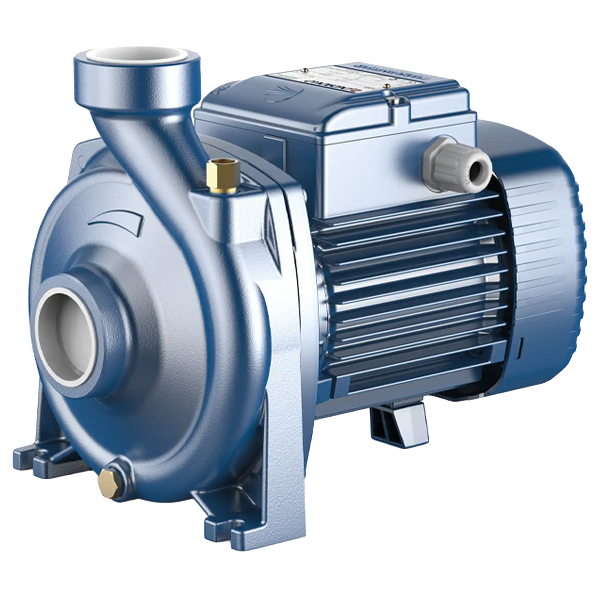 |
Pedrollo HF Range High flow centrifugal pumps built for furrow and sprinkler irrigation at medium to low heads, drawing from lakes, rivers and wells. A strong match for the field-scale flows in Method 1. |
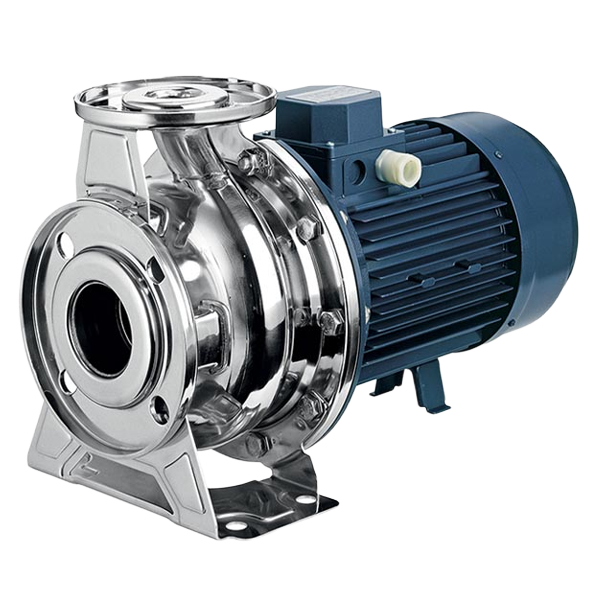 |
Ebara 3M Series Stainless steel centrifugal pumps for agricultural water supply and irrigation duties, covering a wide band of flow and head combinations for zoned systems. |
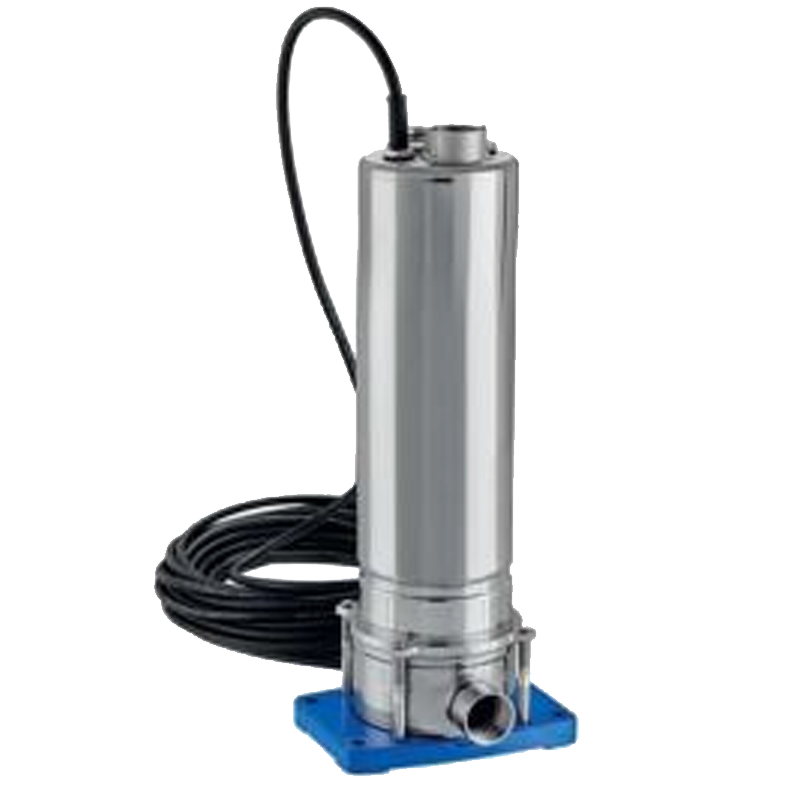 |
Lowara Scuba Submersible pumps for sprinkler irrigation drawn from wells, tanks, ponds and rainwater harvesting systems, suited to garden and agricultural duties where the source sits below the system. |
 |
Koshin SERH Engine driven pumps for sprinkler irrigation in fields without a mains electricity supply, delivering the pressure sprinkler systems need at the emitter. |
 |
Pedrollo JCR Range Self-priming pumps for garden and orchard irrigation at the lower flows in the examples above, handling suction lines that contain air at start-up. |
Give us the flow, the head and the water source on +44 1332 913500 and we will match a pump to the duty.
We’re here to answer your questions and help you find the perfect pump for your irrigation needs.
Fill in the form below and one of our friendly advisors will contact you.