Industry
Application Guides
Whether you’re lifting foul water out of a basement, running a municipal pumping station, or moving trade effluent across a factory floor, choosing the right wastewater pump makes the difference between a system you can forget about and one that calls you out every other week. Wastewater is rarely just water. It carries rags, grit, fats, fibres and chemicals, and each of those will find the weakness in a pump that was never designed for the job. This guide walks through the wastewater pumps we supply, what separates them, and where each one earns its place. For further information or specific questions, please contact us on +44 1332 913500.
Wastewater pump duties vary enormously, so the same seven questions are worth asking every time. Work through them in order and the shortlist tends to narrow itself.
This is the question that decides everything else. Grey water from sinks and showers is a very different proposition to raw sewage carrying wipes and sanitary items, and both are different again to an industrial effluent full of abrasive fines. Be honest about the worst case rather than the average, because it is the worst case that blocks the pump. Specify the wastewater pump for what the system will actually see.
Free passage is the size of the largest solid a pump can swallow without jamming, and it is usually the single most useful number on the datasheet. Vortex impellers create a swirl that carries solids through with minimal contact, which suits stringy or fibrous content. Single channel impellers pass larger solids more efficiently, while chopper and grinder pumps cut solids down before they ever reach the discharge pipe. Our overview of the different impeller types compares open, closed, semi-open, vortex and cutter designs side by side.
Flow tells you how much you need to move, and head tells you how hard the pump has to work to move it. Remember that head is not just the vertical lift. Friction losses through long or narrow rising mains add up quickly, and undersized pipework is a common reason a pump that looked right on paper underperforms once installed.
Trade effluent can be acidic, caustic, hot, or all three. Cast iron copes well with general sewage but struggles with aggressive chemistry, whereas stainless steel and engineered plastics handle far more. Check the elastomers as well, since seals and diaphragms usually fail long before the pump body does. If you know what is in your effluent, our chemical compatibility calculator will tell you which materials will stand up to it.
A pump that has to be lifted by two people through a manhole in the rain will not get serviced as often as it should. Guide rail systems allow submersible pumps to be withdrawn without anyone entering the chamber, which matters for both safety and maintenance cost. Sump geometry also affects how well solids are drawn towards the pump rather than settling in corners.
Consider how often the pump will start, how long it runs, and what happens when it fails. Frequent short starts wear motors quickly, so sizing the sump for a sensible run time is often better than fitting a bigger pump. On anything critical, a duty and standby arrangement with automatic changeover keeps the site running while one pump is being repaired.
Where the wastewater ends up determines what you are legally allowed to send there. Discharging trade effluent to a public sewer requires a trade effluent consent from your sewerage undertaker, while discharging to surface water or ground usually needs an environmental permit from the Environment Agency. Sorting this out before you specify equipment avoids expensive redesign later.
Almost every wastewater pump falls into one of two families, and understanding which family you are in explains most of the behaviour you’ll see on site.
These use a rotating impeller to add energy to the liquid. They move large volumes efficiently and dominate sewage and drainage work, although flow drops away as the pressure they have to work against rises.
Sited in the liquid itself, these pumps are quiet, self-cooling and space-efficient, with no need for a dry chamber above ground. They are the default choice for wet wells, sumps and lifting stations.
The recessed impeller sits back from the flow path and moves solids on a swirl of liquid instead of through the vanes. Efficiency is lower, but blockages are far rarer with fibrous or rag-laden sewage.
A cutting mechanism shreds solids into a slurry before pumping. This suits small-bore rising mains and any application where wipes and fibres would otherwise cause repeated blockages.
Installed above the liquid, these clear air from the suction line and lift the liquid to themselves. They suit portable, hire and site-drainage work where getting a pump into the sump is impractical.
A rubber impeller flexes against a cam to move liquid gently, giving a self-priming pump that handles light solids and can run in either direction. Useful for tank emptying and general utility duties.
These trap a fixed volume of liquid and push it through the discharge. Flow stays consistent regardless of pressure, and they handle viscous, abrasive and chemically aggressive liquids that would destroy a centrifugal pump. For a fuller explanation of the principle, see our guide to what a positive displacement pump is and how it differs from a rotodynamic one.
Compressed air drives two diaphragms alternately. There are no electrics, they self-prime, and they stall against a closed valve rather than building pressure, which makes them very forgiving in unpredictable industrial conditions.
The same diaphragm principle driven by an electric motor rather than air. Running costs fall substantially compared with compressed air, which matters on continuous duties.
The liquid only ever touches the inside of a hose, so there are no seals or valves to clog. Ideal for abrasive sludges, lime slurries and dosing where accuracy and containment both matter.
Precision units that deliver small, controlled volumes of treatment chemical. They underpin pH correction, coagulation, flocculation and disinfection across water and wastewater treatment.
We’ve broken our recommendations down by application. Jump to the one that fits your needs:
Reliable Foul Water Removal: Perfect For Homeowners, Plumbers & Small Installations
Basement bathrooms, converted cellars, utility rooms and garden annexes all share the same problem. The drainage point sits below the gravity sewer, so the wastewater has to be lifted. These duties are low flow but high consequence, because a domestic wastewater pump failure ends up on somebody’s floor. Reliability and sensible solids handling matter far more than raw performance here.
Compact submersibles sit in a small chamber or sump and start automatically on a float switch, handling everything from grey water to domestic sewage.
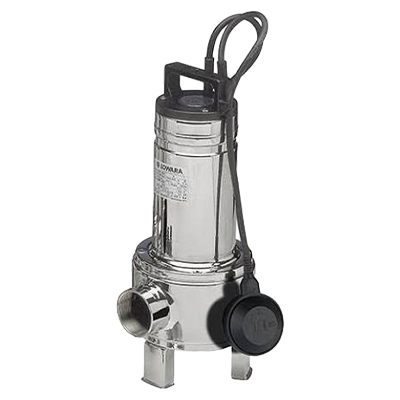 |
Lowara DOMO A well proven domestic sewage range with vortex and single channel options, so you can match the impeller to whether you’re handling grey water or full foul waste. A sensible default for basement bathrooms and small lifting chambers. |
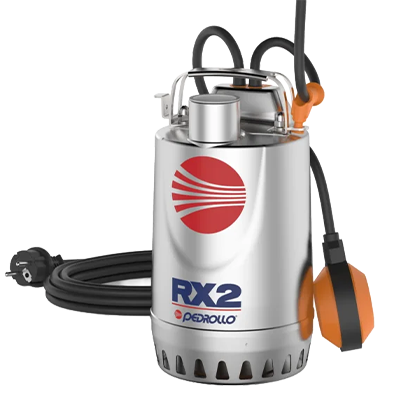 |
Pedrollo RX Range A cost-effective submersible for dirty water and light sewage duties around the home. Straightforward to install and easy to live with where the flows are modest. |
 |
Dreno Pompe Compatta Purpose-built for residential sewage in a compact footprint, which helps when the chamber is tight. A good option where a general drainage pump would struggle with the solids content. |
Where there is no room to build a chamber, a sealed tank with the pump already fitted inside solves the problem in one delivery.
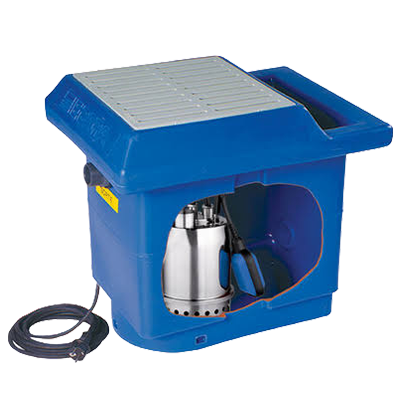 |
Ebara Best Box A self-contained lifting unit with tank inlet and non-return device built in, so it needs no burial. Ideal for collecting shower and appliance wastewater, or rainwater from garage ramps and washing areas. |
Key benefits: Automatic float operation • Handles grey water and foul waste • Compact enough for tight chambers • Packaged options need no excavation • Quiet running in occupied buildings
Pumping Station Performance: Perfect For Developers, Utilities, Facilities Managers & Contractors
Adoptable pumping stations, housing developments, commercial premises and municipal networks all demand pumps that run for years with minimal intervention. Flows are higher, solids are unpredictable, and a municipal wastewater pump that stops carries real consequences. This is duty and standby territory, with guide rails, level controls and alarms as standard rather than optional.
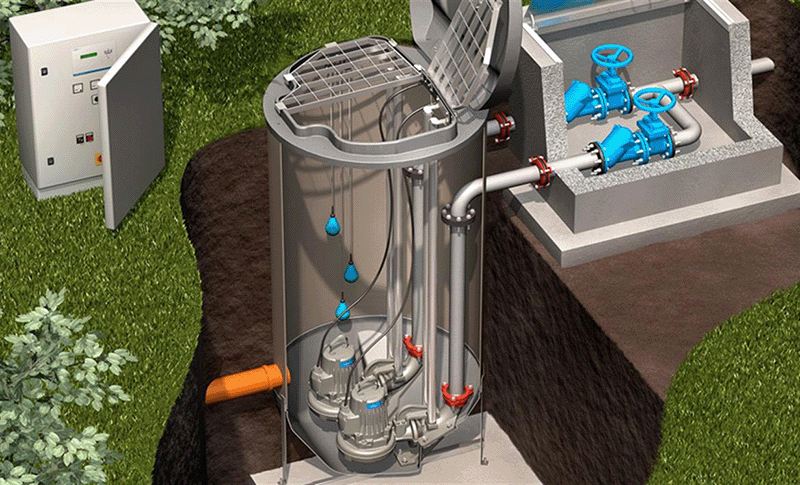
Heavy-duty submersibles designed to pass the solids found in untreated sewage without repeated blockages.
 |
KSB Amarex N Built for municipal sewage and wastewater transport where continuous, unattended running is expected. The obvious choice when the station is going to be adopted and needs to perform for decades. |
 |
Lowara DL Sewage A dependable submersible sewage range for commercial and municipal lifting stations. Widely specified, well supported, and available in configurations to suit most wet well arrangements. |
 |
Dreno Pompe DNA The wide channel design is the point here, giving generous free passage for liquids carrying substantial solids. Well suited to treatment plants, municipal sewage systems and agricultural waste. |
Smaller stations and commercial premises rarely need station-scale equipment, but they still need proper sewage handling.
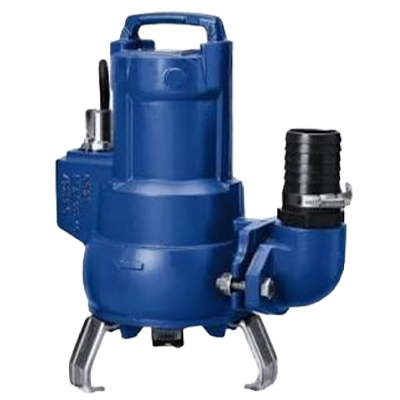 |
KSB Ama-Porter A compact submersible that bridges the gap between domestic units and full station pumps. A practical fit for small commercial buildings, car parks and light industrial drainage. |
Key benefits: Built for continuous unattended duty • Generous free passage for solids • Guide rail removal without confined space entry • Duty and standby configurations • Supported by UK spares and service
Keeping Solids Moving: Perfect For Treatment Works, Digesters & Farm Effluent
Rags, wipes and fibrous screenings are the single most common cause of blockages at treatment works, and they defeat pumps that would otherwise handle the flow comfortably. Digestate is stringy, tank contents stratify if left undisturbed, and anything that spins will eventually collect a rag. The equipment here either cuts through the problem at the inlet or keeps the liquid away from moving parts entirely. If your duty is specifically transferring thick sludge rather than dealing with solids in a wastewater system, our guide to choosing a sludge pump compares the pump types side by side in more detail.
Cutting the solids before pumping prevents the blockages that would otherwise dominate the maintenance schedule.
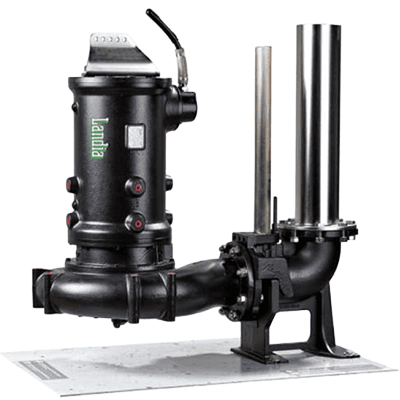 |
Landia DG-I Chopper The chopper system shreds solids and fibrous material as they enter the pump, which is exactly what rag-heavy sludge demands. A long-standing favourite on treatment works and anaerobic digestion plants. |
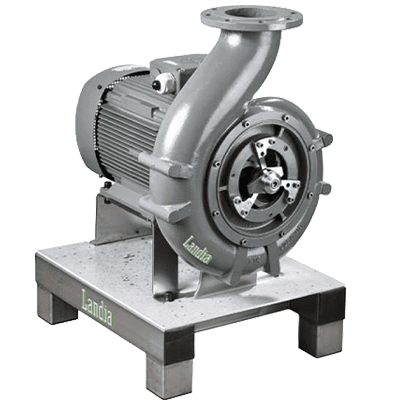 |
Landia MPTK Built for moving solids-laden liquids between tanks and lagoons on treatment and farm sites. Copes where consistency varies unpredictably from one batch to the next. |
Sludge that has settled into layers will not pump properly, so keeping the tank homogeneous is half the battle.
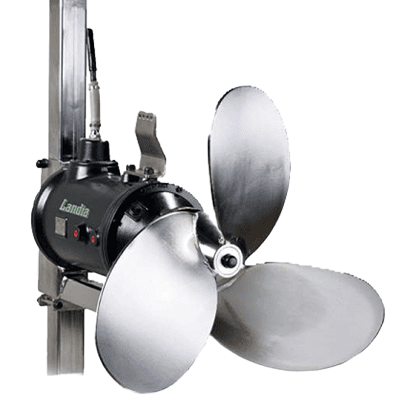 |
Landia POP-I Mixer Keeps solids in suspension so that crusting and sedimentation don’t build up in the tank. Pairing a mixer with a chopper pump usually solves problems that neither would fix alone. |
When the sludge is abrasive enough to eat impellers, removing the wetted parts from the equation is the more economical route.
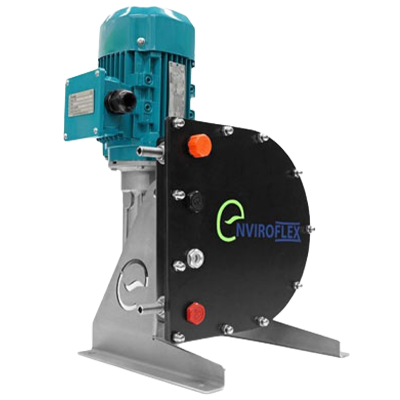 |
Enviroflex L Series Manufactured in the UK, with only the hose in contact with the liquid, so there are no seals or valves for rags to catch on and wear is confined to a replaceable part. Handles soft solids up to 120 mm, which covers most of what arrives at a treatment works alongside lime slurry, polymer and digestate duties. |
Key benefits: Chopper models shred rags and fibres at the inlet • Peristaltic pumps pass solids whole with no seals or valves to catch on • Keeps tank contents in suspension • Consumable wear parts keep costs predictable • Proven on digestate and treatment works duties
Process Waste Under Control: Perfect For Manufacturing Sites, Process Plants & Maintenance Teams
Industrial wastewater is unpredictable by nature. One line produces hot caustic washdown, another sends abrasive fines to the same sump, and a third contributes solvent traces. A positive displacement wastewater pump handles this variety comfortably because it tolerates solids, self-primes, and can be built from materials matched to the chemistry.
No electrics in the wet area, a pump that stalls rather than over-pressurising, and simple maintenance make these a workhorse for effluent duties.
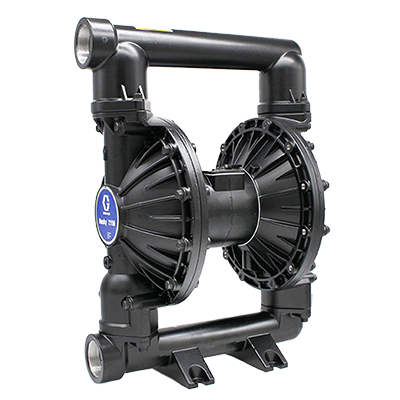 |
Graco Husky An extensive range covering corrosive acids, caustics, abrasive slurries and detergents, with a wide choice of wetted materials including polypropylene, PVDF, aluminium and stainless steel. Many models are ATEX-rated. If the effluent composition changes regularly, that flexibility is worth a great deal. |
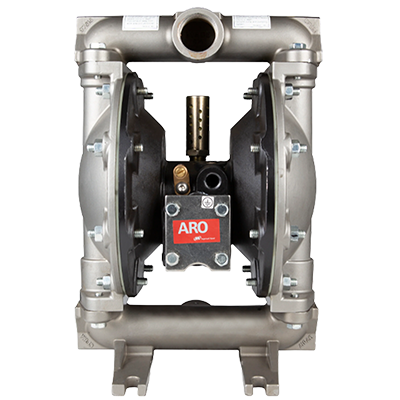 |
Aro Expert Series Aimed at the harder end of the duty, covering slurry pumping, filter press feed and abrasive or corrosive liquids. A strong option where a standard transfer pump has already proved short-lived. Like the Husky, ATEX-certified configurations are available where the area classification requires them. |
The same tolerance for difficult liquids, without the running cost of compressed air on continuous duties.
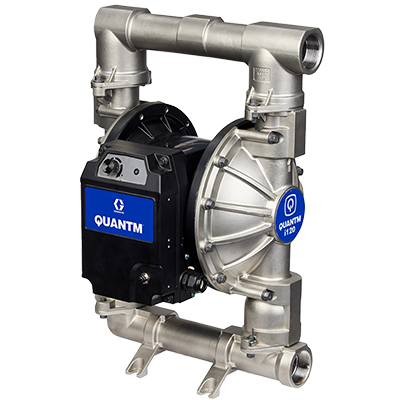 |
Graco Quantm Delivers diaphragm pump behaviour from an electric motor, with energy savings of up to 80% against an equivalent air-driven unit. Variable speed and self-priming as standard, and it will stall under pressure without needing extra sensors. |
Where volumes are high and the pump has to sit above the liquid, a self-priming unit avoids building a wet well.
 |
Varisco J Series Self-priming centrifugal pumps that prime rapidly without a foot valve and pass solids up to 76 mm, all from an accessible position above the sump. Available in cast iron, hardened cast iron and stainless steel, so the material can be matched to the effluent. |
Key benefits: Materials matched to aggressive chemistry • Stalls against a closed valve instead of over-pressurising • Handles abrasive and solids-laden effluent • Electric options reduce energy cost • ATEX-certified units available for classified areas
Accuracy Where It Counts: Perfect For Treatment Works, Package Plants & Compliance Teams
Treatment stands or falls on dosing accuracy. Too little coagulant and the process underperforms, too much and you’ve wasted chemical and possibly breached consent. These wastewater pumps deliver small, repeatable volumes against pressure, and they handle chemicals that would corrode general-purpose equipment.
Compact, precise and easy to control, these cover the majority of small to medium dosing duties.
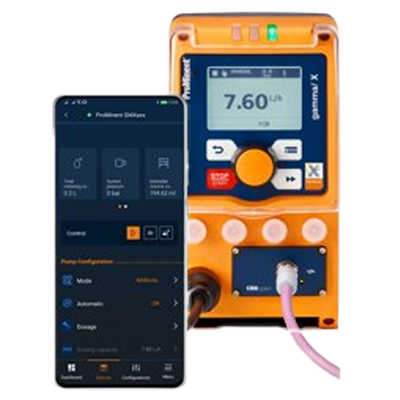 |
ProMinent Gamma A well-featured solenoid dosing pump with control and monitoring options that suit automated treatment. A sensible standard where dosing needs to respond to a signal rather than run at a fixed rate. |
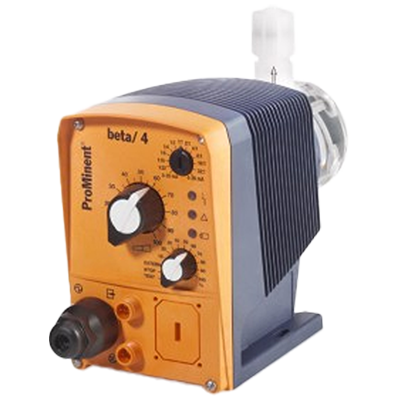 |
ProMinent Beta A straightforward, dependable dosing pump for routine chemical addition. The practical choice where the duty is steady and the priority is reliability rather than advanced control. |
When volumes or pressures exceed what a solenoid unit can deliver, a motor driven pump takes over.
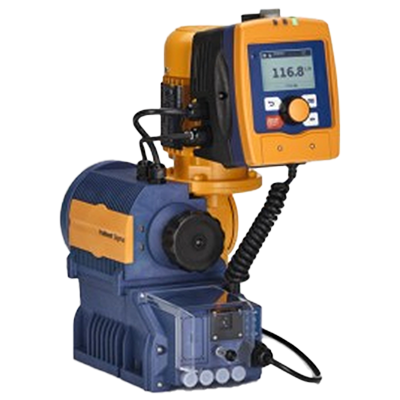 |
ProMinent Sigma X Built for higher capacity dosing on larger treatment plants, with the control sophistication to match. The step up when a solenoid pump is running at the top of its range. |
Moving treatment chemicals from bulk storage to day tanks needs containment as much as flow.
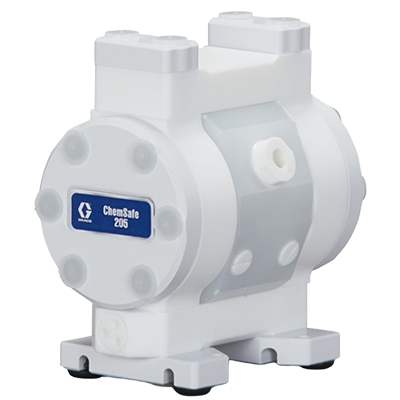 |
Graco ChemSafe Designed with no exposed metal in the fluid path, which matters when handling acids, caustics and solvents. It stalls against a closed valve rather than building pressure, so no discharge relief valve is needed. |
Key benefits: Repeatable dosing accuracy • Chemical-resistant wetted materials • Automated control and monitoring options • Scales from package plant to major works • Supports consent compliance
Water Cleared Fast: Perfect For Contractors, Facilities Teams & Site Managers
Sometimes the requirement is simply to get dirty water out and keep it out. Car park sumps, interceptors, washdown bays, plant rooms and waterlogged excavations all need a wastewater pump that copes with grit and debris, and that starts reliably on demand after months of sitting idle. Tolerance of suspended solids matters more here than outright efficiency. If your concern is emergency flood clearance rather than routine site drainage, our guide to choosing a flood water pump covers puddle suckers, engine-driven units and battery-backed options in detail.
Robust units built for dirty water carrying suspended solids, grit and debris.
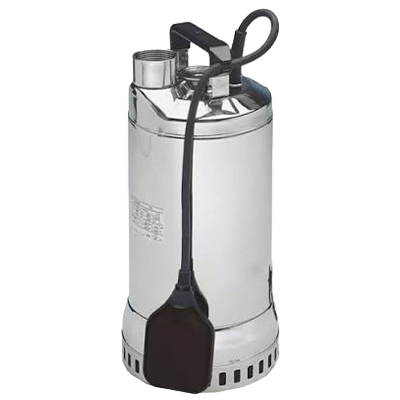 |
Lowara DIWA A dependable drainage submersible for clearing dirty water from sumps, plant rooms and excavations. Easy to deploy for a one-off job, and equally suited to being left permanently installed on a float. |
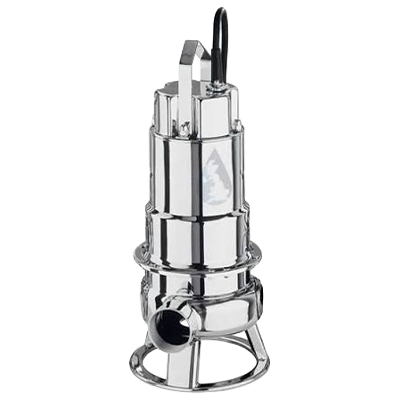 |
Ebara DW Handles civil and industrial wastewater alongside drainage of wells, excavations and seepage water. A versatile unit when the duty spans both dirty water and light sewage. |
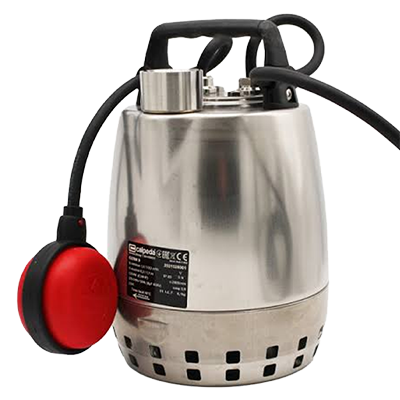 |
Calpeda GX Series Stainless construction with smooth surfaces makes this easy to clean down after use, and it will pass solids up to 35 mm. Useful where hygiene or corrosion resistance rules out cast iron. |
A self-priming option that sits outside the sump, handy where lowering a pump into the liquid isn’t practical.
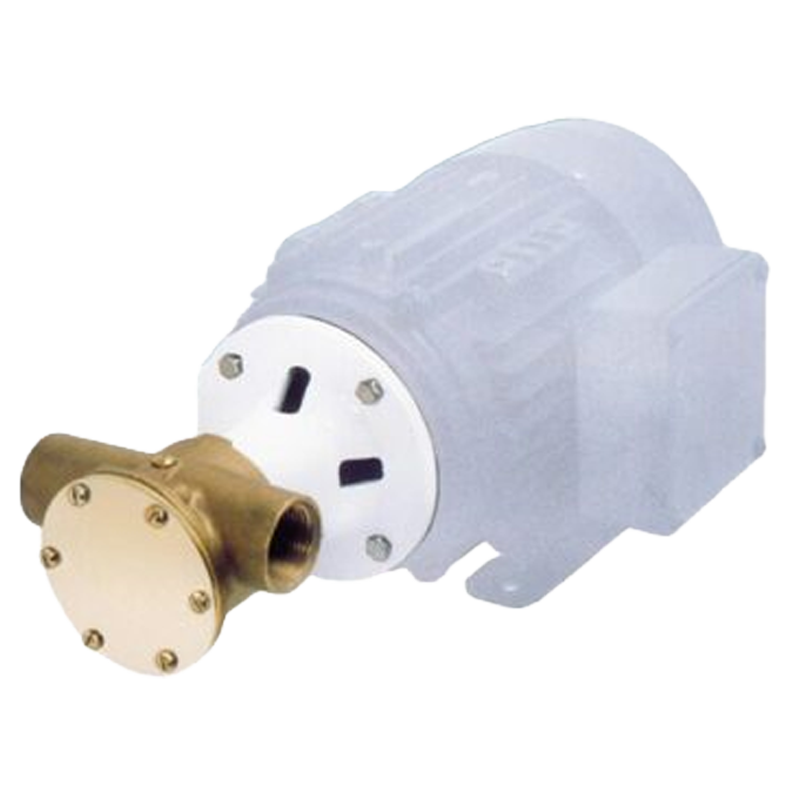 |
Jabsco Bronze Series Self-priming and reversible, covering cellar, yard and sump drainage as well as emptying sewage tanks. A genuinely useful maintenance pump to have on site for jobs that don’t justify dedicated equipment. |
Key benefits: Rapid clearance of dirty water • Tolerates grit and suspended debris • Portable or permanently installed • Automatic float operation available • Reliable starting after long idle periods
This guide covers the full breadth of wastewater pumping. Where a duty needs more depth, these companion guides go further into pump types, specifications and trade-offs:
Beyond wastewater pump selection, several additional components ensure safe, efficient operation:
We’re here to answer your questions and help you find the perfect wastewater pump for your site.
Fill in the form below and one of our friendly advisors will contact you.

