Industry
Although BSP and NPT threads can appear similar at a glance, they follow different standards and are not interchangeable. Using the wrong type can lead to leaks, thread damage, or connection failure, especially in pressurised systems. This guide outlines the key differences between BSP and NPT threads, including their origins, thread geometry, sealing methods, and how to measure them accurately. Whether you’re troubleshooting an existing setup or selecting components for a new installation, understanding these distinctions can help ensure a secure, reliable connection.
NPT and BSP are both pipe threads, which are the spiral grooves on the ends of pipes that help them screw together tightly. They’re used to join pipes in plumbing, gas lines, and other systems that move liquids or gases. The threads help create a secure, leak-proof connection.
To begin with, the origins of NPT (National Pipe Thread) date back to 1864, when American engineer William Sellers proposed the idea of standardised screw threads. As a matter of fact, his work laid the groundwork for what would become the ANSI/ASME B1.20.1 standards, American technical standards for pipe threads used in engineering and manufacturing, a cornerstone of North American piping systems.
As industry expanded, so did the need for leak-proof connections. Consequently, NPTF, short for National Pipe Taper Fuel, a dryseal variant was developed to form tighter, more reliable joints. It was designed to seal without thread tape or liquid sealant.
Key characteristics of NPT include a 60-degree thread angle, which is the angle formed between the flanks of the thread, and a tapered profile, where the threads gradually become narrower toward the end. This design creates a seal through the physical fit of the threads, a method still widely used today in applications ranging from domestic plumbing to heavy industry throughout the US and Canada.
Meanwhile, across the Atlantic, British engineer Sir Joseph Whitworth introduced his own thread standard in 1841. His design featured a 55° thread angle with rounded roots and crests, the curved bottoms and tops of each thread, prioritising strength and ease of manufacturing.
This evolved into BSP, short for British Standard Pipe, later formalised by the British Standards Institution in the early 20th century. It eventually split into two widely used types:
Thanks to the global influence of the British Empire, BSP became the dominant thread system across Europe, Asia, Australia and many other regions—and it remains in widespread use to this day.
It’s important to know which standard you’re using because BSP and NPT threads are not compatible with each other. They have different angles and shapes, so trying to mix them usually results in leaks.
| Features | NPT | BSP |
|---|---|---|
| Flank Angle | 60° | 55° |
| Crest/Root Shape | Flat (Sellers standard) | Rounded (Whitworth standard) |
| Thread Form | Tapered (NPT, NPTF) | BSPT (tapered) or BSPP (parallel) |
| Seal Method | Sealant tape/compound | BSPT: taper seal; BSPP: washer/O‑ring or bonded ring |
| Pitch (TPI) Variations | ¼″ NPT = 18 TPI; ½″ NPT = 14 TPI | ¼″ BSP = 19 TPI; ½″ BSP = 14 TPI |
| Interchangeability | Not interchangeable – differences in pitch/angle prevent sealing | |

Even if you can physically force a BSP fitting into an NPT port (or vice versa), the threads:
In pumps, this can cause leakage under pressure, vibration loosening, or even catastrophic failure in high-pressure systems.
Use a thread pitch gauge to measure the thread angle:
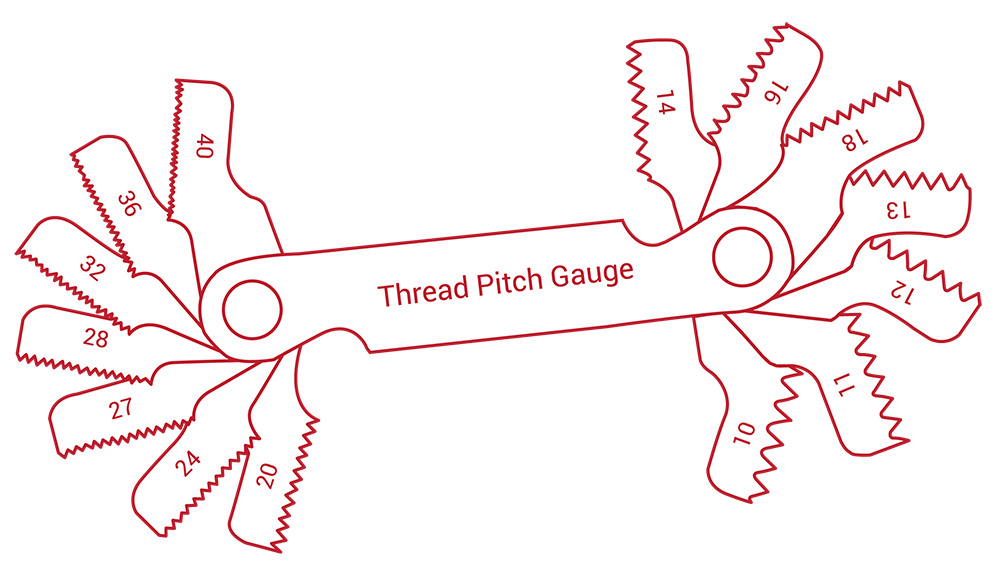
How to check:
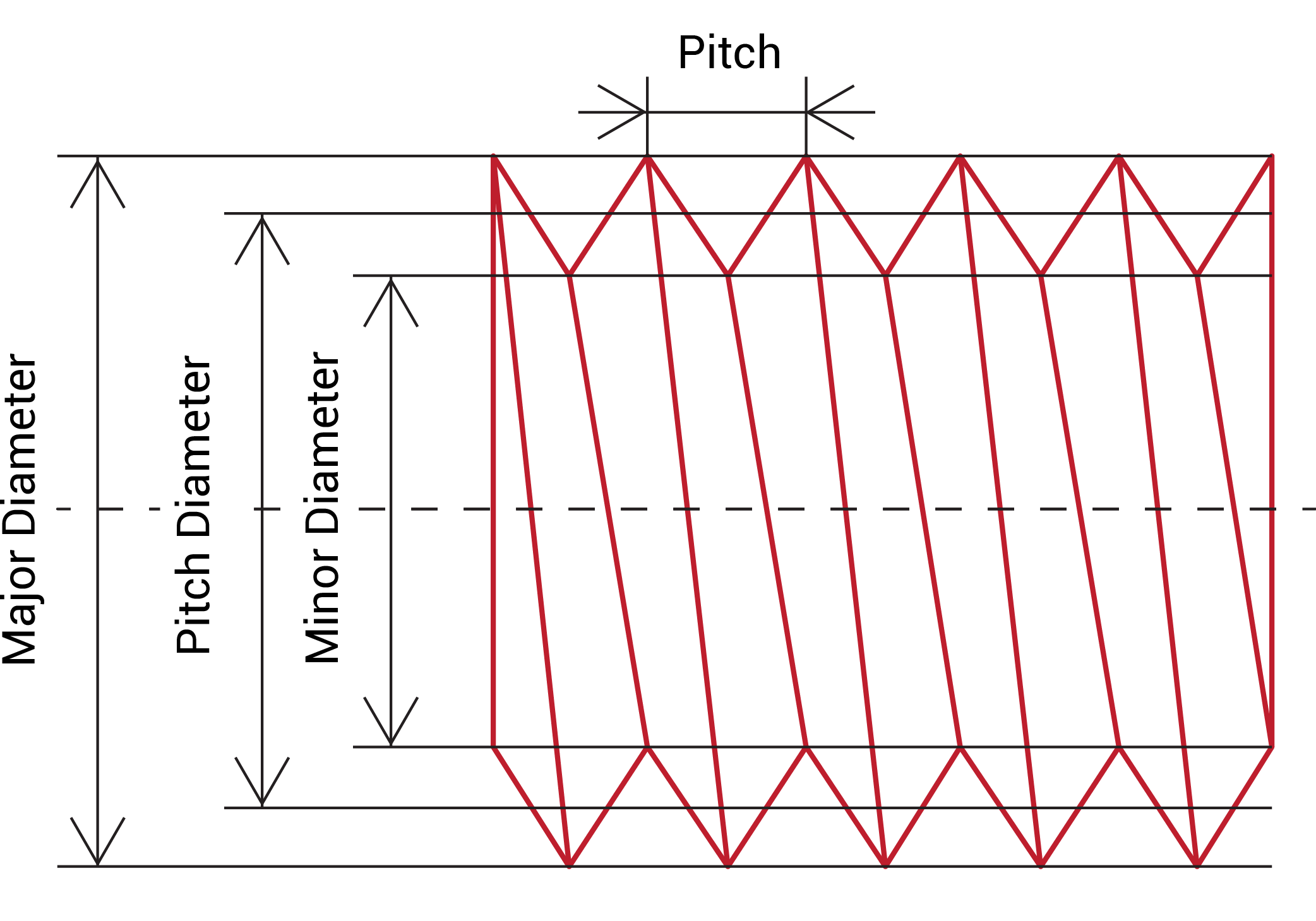

How to measure:
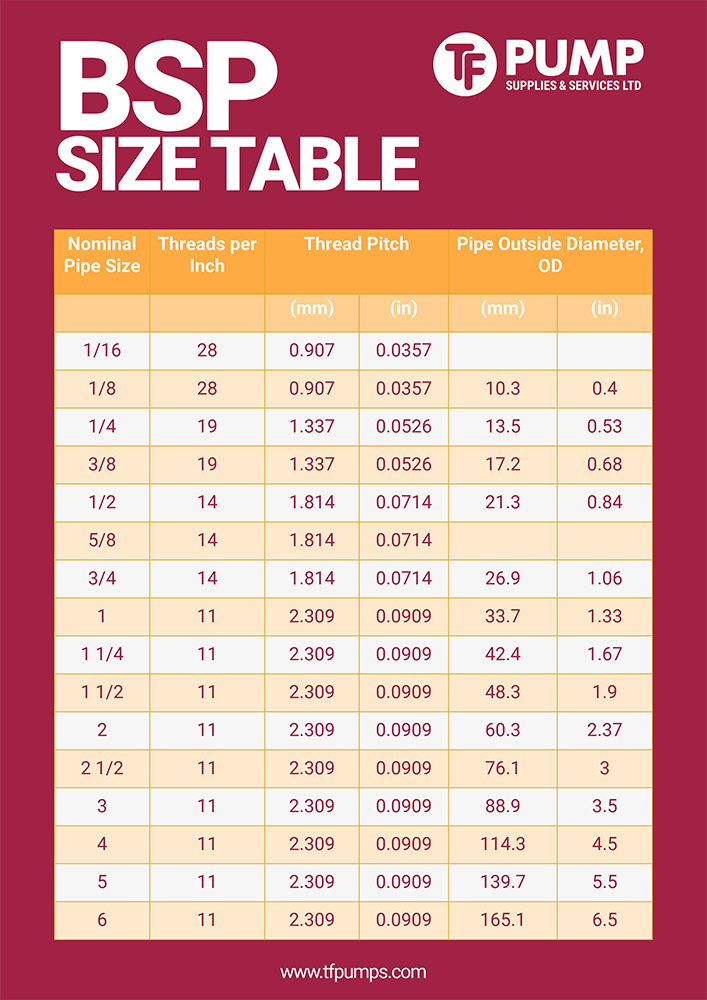
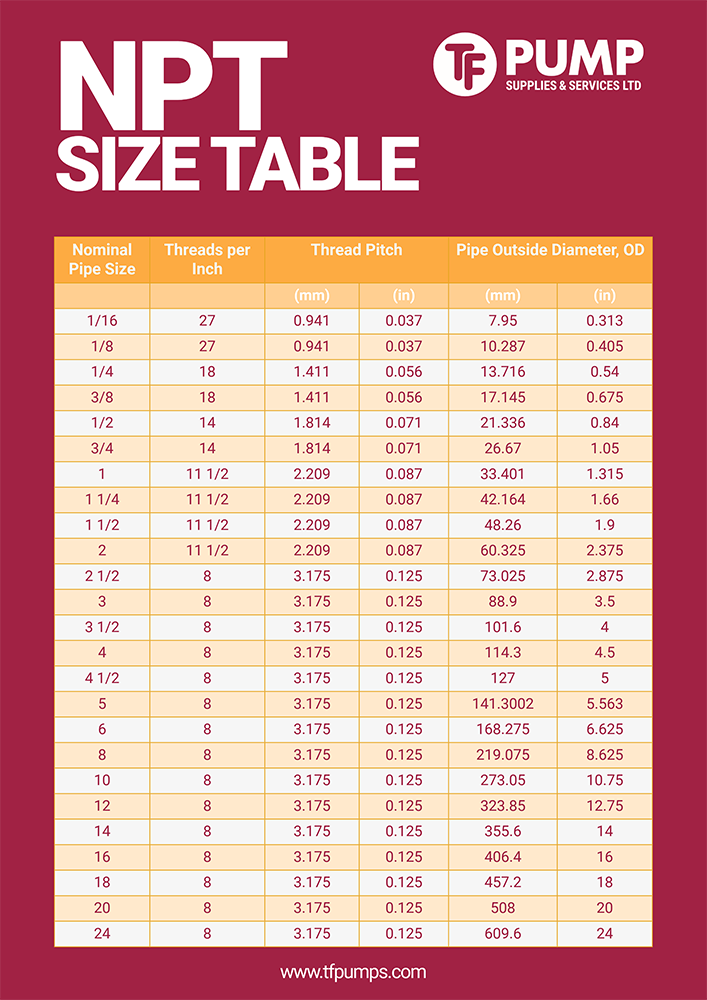
Use these size charts for reference:
Sealant Required: Always use PTFE tape (also called plumber’s tape) or a thread-sealing compound.
Why: The tapered design creates a seal, but the spiral gaps between threads still allow fluid or gas to escape without a sealant.
Application Tip: Wrap PTFE tape clockwise around the male thread 2–3 times. Avoid overwrapping, as it can cause cracking or misalignment.
Sealant Recommended: Like NPT, BSPT threads benefit from PTFE tape or anaerobic thread sealants.
Important: While similar to NPT in function, BSPT threads are not interchangeable with NPT and should only be paired with correct fittings.
No Tape Needed: These threads do not seal on the thread itself.
Seal Method: Use washers, bonded seals, or O-rings at the face of the fitting.
Common Use: Found in systems where alignment matters (e.g., hydraulic connections), as the parallel threads allow rotational adjustment.
Understanding the difference between BSP and NPT threads is crucial when working with piping systems, whether in plumbing, hydraulics, or industrial machinery. Although they may appear similar at first glance, their thread angles, shapes, sealing methods, and global usage vary significantly. As a result, they are not compatible without the use of adaptors. Attempting to mix them can lead to leaks, equipment damage, or even complete system failure.
When choosing or replacing fittings, it is essential to identify the correct thread type, whether tapered or parallel, and whether it is BSP or NPT or another standard. Use accurate measurement tools and reference charts to verify the specifications. Also, keep in mind that selecting the right sealing method, such as tape, thread compound, or an O-ring, is just as important as matching the correct thread.
With this knowledge, you will be better prepared to make informed choices, prevent costly errors, and maintain a reliable, leak-free connection every time.
Please be aware. there are many other thread standards, which have originated over the years from the likes of Germany, France, Japan & other industrialised countries. We recommend you identify & know the thread standards/limitations you have & are working with.
Friction Loss – What is it and how do I calculate it?
Understanding Pulsation: What It Is and Why You Should Consider a Pulsation Dampener
A Guide For Choosing Your Distillery Pump
Fill in the form below and one of our friendly advisors will contact you.