Industry
While AODD pumps excel at handling viscous fluids, standard configurations often fail to deliver optimal performance for heavy adhesives, resins, slurries, or polyurethane compounds. The challenge is simple physics: as viscosity increases, internal friction rises exponentially, slowing check valve response, reducing cycle speed, and preventing complete chamber fills. The result is a flow loss of 30 to 50 percent or more, depending on fluid thickness.
This guide covers practical pump modifications for viscous materials and demonstrates how to improve AODD pump performance with thick fluids, from component selection and system design to installation best practices. Start with our AODD Pump Viscosity Correction Tables to understand expected performance loss at your fluid’s viscosity, then use this guide to implement adaptations that recover that lost capacity.
When pumping high-viscosity fluids, these five factors determine your pump’s actual performance:
Standard check valve balls are optimised for low-viscosity fluids. In thick media, internal friction slows the ball’s response dramatically, preventing complete seating and causing backflow, incomplete chamber fills, and product dribble. Weighted or stainless steel balls improve seating force and enable faster response despite viscous drag.
The diaphragm must resist swelling, stiffening, and degradation from your specific fluid. Incompatibility is one of the most common hidden failures, leading to premature failure mid-production. Different fluid families (silicone adhesives, polyurethane resins, mineral oils, synthetics) require different elastomer chemistry, EPDM for water and light oils, Viton for mineral oils, and custom compounds for speciality fluids.
Viscous fluids create high friction losses as they move through pipes. Resistance increases dramatically as pipe diameter shrinks and viscosity rises. Each bend, elbow, or tee creates localised pressure drops that compound at high viscosity. A 90-degree elbow can be equivalent to 3–5 metres of straight pipe at high viscosity.
Higher air pressure accelerates diaphragm motion and improves check valve response, but exceeding rated pressure voids the warranty and risks seal or diaphragm failure. The standard approach for viscous service is operating at 75 to 90 percent of the pump’s rated air pressure. If performance is still inadequate, upgrade to a larger pump model rather than over-pressurise.
Viscosity is highly temperature dependent. A fluid pumpable at 40°C may not be at 20°C, or may be excessively thin at 60°C. Heating by just 10 to 20 degrees Celsius can dramatically improve pumpability. Account for seasonal ambient variations when sizing your pump, and use fluid heaters or insulation to maintain optimal viscosity.
Improving seating force and check valve response in thick media.
Standard check valve balls are designed to open and close responsively in low-viscosity fluids. With viscous media, internal friction increases dramatically, slowing the ball’s response and preventing complete seating. This causes backflow and loss of prime, incomplete chamber fills between strokes, and product dribble and waste.
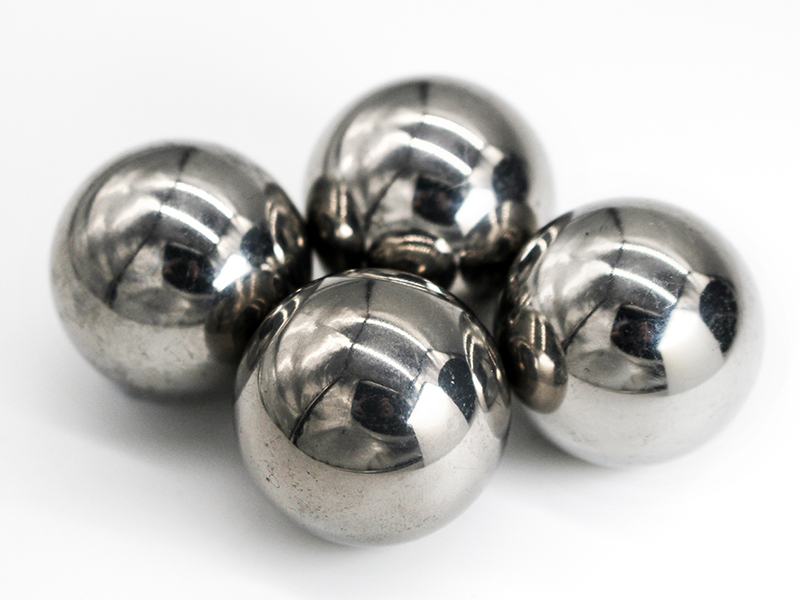 |
Weighted or Stainless Steel Check Valve Balls Weighted check valve balls improve seating force and enable faster response despite viscous drag. The increased mass helps the ball overcome internal friction and seat reliably, even when pumping heavy adhesives, resins, and polyurethane compounds. Always request the exact specification for your fluid type and viscosity range from the pump manufacturer. |
Key benefits: Reduced backflow • Faster check valve response • Improved prime retention • Complete chamber fills • Reduced product waste
Selecting the correct elastomer chemistry for your fluid type.
Diaphragm material is often overlooked but critical for viscous service. The diaphragm must flex reliably under load and resist swelling, stiffening, or degradation from the fluid. Incompatibility is one of the most common hidden failures in viscous applications, leading to premature failure mid-production, a costly interruption.
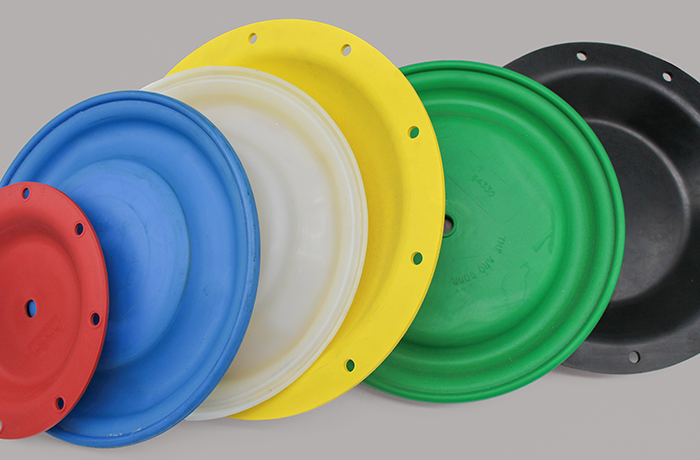 |
Custom Elastomer Compounds Different fluid families require different elastomer chemistry. Standard recommendations: EPDM for water and light oils; Viton for mineral oils and many synthetics; for speciality adhesives and resins, pump manufacturers offer custom elastomer compounds developed specifically for those fluid families. These proprietary materials are not off-the-shelf, you need to request them from your supplier based on your exact fluid specification. Always provide the fluid’s chemical composition or product datasheet to get the correct diaphragm material. |
Key benefits: Resistance to chemical swelling • Extended diaphragm life • Reliable flexing under load • Prevents mid-production failures • Optimised for specific fluid families
Minimising friction loss to reduce pump strain and improve flow.
Viscous fluids create high friction losses as they move through pipes. Resistance increases dramatically as pipe diameter shrinks and viscosity rises. By increasing the pipe diameter, you reduce pressure drop on both the pump’s suction and discharge. By ensuring the pump is fed correctly with the right diameter and length of suction pipework and manifolds, you prevent cavitation issues and improve performance.
Beyond pipe diameter and length, minimising bends, valves, tees, and any other obstacles in your suction and discharge lines is equally critical. Each bend, elbow, or tee creates a localised pressure drop, and with viscous fluids, these add up quickly. Friction loss in a 90-degree elbow can be equivalent to 3–5 metres of straight pipe at high viscosity. Use long-radius elbows instead of short-radius, and redesign layouts to keep line runs as straight and direct as possible. Reducing unnecessary obstacles in your pipework can improve performance as much as oversizing the pipe diameter and minimising pipe length itself.
Benefits of properly sized and optimised pipework for viscous pumping include improved suction lift capacity, faster cycle speed, and reduced energy consumption.
General guidance: Use the next pipe size larger than standard calculations suggest. For viscosities above 1,000 cPs, keep discharge velocity below 1.2 metres per second; above 5,000 cPs, keep it below 0.6 metres per second. This seemingly small investment in system design often provides the best return on performance improvement. Learn more about friction loss and how to calculate it.
Balancing energy input without risking equipment damage.
Higher air pressure boosts pump energy, accelerates diaphragm motion, and improves check valve response. However, exceeding rated pressure voids the warranty and risks seal or diaphragm failure. The standard approach for viscous service is operating at 75 to 90 percent of the pump’s rated air pressure. If performance is still inadequate, upgrade to a larger pump model rather than over-pressurise, alongside evaluating your system pipework. This is more reliable and often more cost-effective long-term.
Improving chamber utilisation by extending fill time.
For very viscous fluids, intentionally slowing pump speed can improve net flow efficiency by extending fill time and increasing chamber utilisation by ensuring the check valves are fully open and closed at the correct times. At very high cycle speeds, chambers don’t fill completely before discharge, which can result in cavitation. Slower operation allows more time for the viscous fluid to fill the chamber, potentially resulting in higher overall flow. Use airline restrictors or metering valves to achieve this.
Ensuring reliable priming and fluid delivery.
Viscous fluids are much harder to lift than water. Pump specifications for suction lift (vertical distance between fluid surface and pump inlet) drop dramatically at high viscosity. Install the pump at or below the fluid level whenever possible. Use large-diameter, short suction lines with minimal bends. Consider a foot valve to prevent suction line drainage.
For viscosities above 10,000 cP or lifts exceeding 5 feet, use a pressurised inlet (boost pump or positive displacement source) to ensure reliable priming.
Maintaining optimal viscosity throughout the process.
Viscosity is highly temperature dependent. A fluid that may be pumpable at 40°C may not be at 20°C, and it may even be excessively thin at 60°C. Heating fluid by just 10 to 20 degrees Celsius can dramatically improve pumpability and reduce the pump size, pipe diameter, and length needed.
Use fluid heaters to maintain optimal viscosity before pumping and insulate suction and discharge lines to prevent cooling during transfer. Account for seasonal ambient variations when sizing your pump. Steam or water jacketed AODDs are available upon request.
Safe startup procedures for viscous applications.
AODD pumps are self-priming, but viscous applications require careful startup. Ensure the suction line is fully submerged in the fluid before starting. Begin at low air pressure (30 to 50 PSIg) and increase gradually to operating pressure. Listen for smooth, consistent cycling; sputtering or erratic behaviour indicates incomplete priming. Avoid extended shutdowns where fluid will solidify or suspended solids may settle, as re-priming becomes difficult or impossible.
Use the viscosity correction tables provided to derate and select the correct pump you require to meet your product and pipework demands. For example, a 1″ AODD pump rated at 150 L/min handling a 5,500 cP fluid experiences a 50% reduction, yielding approximately 75 L/min actual flow.
You can then use this to apply the engineering adaptations, manifold upgrade, weighted balls, and larger piping to optimise real-world performance. Include a 10 to 20 percent safety margin by oversizing slightly. This reduces strain on the pump and extends service life in demanding applications.
Consult our AODD Pump Viscosity Correction Tables to get started.
Beyond pump selection, several additional components ensure safe, efficient operation of your viscous fluid transfer system:
Adapting pumps for high viscosity service requires understanding the physics, selecting the right components, and designing the system around the fluid’s demands. Weighted check valve balls, upgraded diaphragm materials, oversized piping, and careful installation are not optional, they are engineering necessities. AODD pumps are fundamentally well-suited to viscous applications. With proper planning and adaptations, you can pump fluids that overwhelm centrifugal or standard displacement pumps. For further information or specific questions about viscous fluid transfer, please contact us on +44 1332 913500.
Fill in the form below and one of our friendly advisors will contact you.